

You've been moisturizing every day.
You've tried rich body creams.
You've switched to a keratosis pilaris moisturizer, invested in expensive lotions, and even followed popular skincare advice.
Yet every time you look at your legs or arms, the same concerns remain:
- Tiny dark dots
- Rough patches
- Bumpy texture
- Visible hair follicles
- Strawberry skin
If this sounds familiar, you're not alone.
One of the most common questions dermatologists hear is:
"Why isn't my body lotion fixing my strawberry skin?"
The answer is surprisingly simple:
Body lotion helps hydrate your skin—but strawberry skin usually isn't caused by dryness alone.
In many cases, strawberry skin develops because of:
- clogged hair follicles
- keratin buildup
- dead skin accumulation
- shaving irritation
- keratosis pilaris (KP)
- impaired skin turnover
Moisturizer is an important part of the solution—but it's rarely the complete solution.
In this guide, we'll explain:
- Why body lotion alone isn't enough
- What actually causes strawberry skin
- The difference between hydration and treatment
- The ingredients that make the biggest difference
- How to build a routine that works
Quick Answer
Body lotion doesn't usually fix strawberry skin because it hydrates the surface of the skin without removing the clogged follicles and keratin buildup that cause rough bumps and dark dots. Most cases of strawberry skin improve best with a combination of gentle exfoliation, hydration, and consistent barrier support.
Key Takeaways
- Body lotion helps with dryness but doesn't unclog follicles.
- Strawberry skin usually involves keratin buildup and dead skin accumulation.
- Many people with strawberry skin also have keratosis pilaris.
- Exfoliation and moisturization work better together than either one alone.
- Healthy skin requires consistency—not aggressive treatment.
- Modern skincare focuses on treating multiple causes at once.
What Is Strawberry Skin?
Strawberry skin is the common name for skin that has:
- tiny dark dots
- visible follicles
- rough texture
- uneven appearance
It most commonly appears on:
- legs (strawberry legs)
- arms
- thighs
- buttocks
The name comes from the resemblance to the dotted surface of a strawberry.
Although many people dislike its appearance, strawberry skin is usually harmless.
What Actually Causes Strawberry Skin?
Many people assume strawberry skin is simply dry skin.
That's only part of the story.
The most common causes include:
- clogged follicles
- keratin buildup
- dead skin cells
- ingrown hairs
- shaving irritation
- dry skin
- genetics
Because several factors contribute at once, moisturizing alone often isn't enough.
Why Moisturizer Feels Like It's Working
This is where things become confusing.
After applying lotion, your skin usually feels:
- softer
- smoother
- more comfortable
Naturally, it seems like the problem is improving.
But within a day or two:
- the bumps return
- the dark dots remain
- the rough texture is still visible
Why?
Because lotion changes how the skin feels, not necessarily what's happening inside the hair follicle.
What Body Lotion Actually Does
A good moisturizer has an important job.
It helps:
- reduce dryness
- prevent water loss
- soften rough skin
- strengthen the skin barrier
- improve comfort
These are all excellent benefits.
But moisturizer doesn't usually:
- remove keratin plugs
- unclog follicles
- dissolve trapped oil
- speed up skin turnover
This explains why your skin feels healthier without looking dramatically different.
The Real Problem Happens Inside the Hair Follicle
Think of the hair follicle as a tiny tunnel.
Over time, it can collect:
- dead skin
- keratin
- oil
- debris
When these materials build up, follicles become more noticeable.
This creates:
- strawberry legs
- visible pores
- rough texture
- dark dots
No matter how moisturizing your lotion is, it can't completely remove that buildup on its own.
The Connection Between Strawberry Skin & Keratosis Pilaris
Many people with strawberry skin also have keratosis pilaris (KP).
KP develops when excess keratin blocks the opening of hair follicles.
This causes:
- rough bumps
- chicken skin
- bumpy skin on arms
- uneven texture
If you have KP, using only a keratosis pilaris moisturizer may soften your skin—but it usually won't eliminate the bumps because the underlying keratin buildup remains.
Why Moisturizers for KP Sometimes Disappoint
Many products marketed as:
- keratosis pilaris lotion
- keratosis pilaris cream
- best lotion for keratosis pilaris
are excellent moisturizers.
But some focus almost entirely on hydration.
If they don't also encourage healthy exfoliation, many users notice:
"My skin is softer... but it still looks rough."
That's because hydration and exfoliation serve different purposes.
Hydration vs. Exfoliation: What's the Difference?
Hydration
Moisturizers:
-
- soften skin
- improve flexibility
- strengthen the skin barrier
- reduce dryness
Exfoliation
Exfoliation helps remove:
-
- dead skin
- keratin buildup
- clogged follicular debris
Without exfoliation, buildup continues to accumulate.
Without hydration, skin becomes irritated.
Healthy skin requires both.
What Ingredients Actually Help Strawberry Skin?
If body lotion alone isn't enough, what should you look for instead?
The most effective routines usually combine hydration with ingredients that help improve skin turnover and reduce follicular buildup.
Salicylic Acid (BHA)
Salicylic acid is one of the most recommended ingredients for strawberry skin treatment because it is oil-soluble.
Unlike many other ingredients, it can penetrate inside the hair follicle, where much of the problem begins.
It helps:
-
- dissolve excess oil
- loosen dead skin cells
- reduce clogged follicles
- improve the appearance of strawberry legs
It's particularly helpful if your strawberry skin is accompanied by:
-
- visible pores
- dark dots
- ingrown hairs
Lactic Acid (AHA)
Lactic acid is another excellent ingredient because it offers two benefits at once.
It gently exfoliates while also helping the skin retain moisture.
This makes it ideal for people with:
-
- keratosis pilaris
- dry skin
- rough texture
- chicken skin on arms
Unlike harsh scrubs, lactic acid works gradually, making it suitable for consistent long-term use.
Glycolic Acid
Glycolic acid is well known for improving:
-
- uneven texture
- dull skin
- rough patches
It encourages healthy skin turnover and can help make the skin appear smoother over time.
Urea
Urea is commonly found in many keratosis pilaris creams and keratosis pilaris lotions.
It helps by:
-
- attracting moisture
- softening keratin
- improving skin flexibility
Although urea is an excellent moisturizing ingredient, it works even better when combined with exfoliating ingredients.
Why Body Scrubs Aren't the Complete Solution
Many people become frustrated with body lotion and immediately switch to aggressive scrubs.
Unfortunately, this often creates another problem.
Harsh scrubs can:
- irritate follicles
- damage the skin barrier
- increase redness
- worsen sensitivity
Instead of smoother skin, you may end up with skin that feels inflamed.
Modern skincare generally favors controlled chemical exfoliation over excessive physical scrubbing because it produces more consistent results with less irritation.
Why Your Skin Barrier Matters
One reason lotion seems ineffective is that the skin barrier itself may already be compromised.
Your skin barrier acts as your body's natural protective shield.
When it's healthy:
- moisture stays inside
- irritants stay outside
- skin feels smoother
- texture improves
When it's damaged:
- dryness increases
- bumps become more noticeable
- irritation worsens
- Strawberry skin appears more obvious
Supporting your barrier is just as important as exfoliating.
The Best Routine for Strawberry Skin
If your lotion isn't delivering the results you expected, it may be time to upgrade your routine.
Step 1: Use a Gentle Cleanser
Avoid harsh soaps that strip away natural oils.
Instead, choose a gentle body wash that cleanses without leaving your skin tight or dry.
Step 2: Exfoliate 2–4 Times Per Week
Regular exfoliation helps remove:
-
- dead skin cells
- keratin buildup
- follicular congestion
Use products containing:
-
- salicylic acid
- lactic acid
- glycolic acid
Avoid over-exfoliating, as too much can damage the skin barrier.
Step 3: Moisturize Daily
This is where your body lotion still plays an important role.
Choose a moisturizer that supports:
-
- hydration
- barrier repair
- smoother skin
Look for ingredients such as:
-
- ceramides
- glycerin
- urea
Remember:
Hydration alone won't remove bumps—but it's essential for maintaining healthy skin.
Step 4: Improve Your Shaving Routine
Poor shaving habits can make strawberry skin much worse.
Before shaving:
-
- soften hair with warm water
- apply shaving cream
During shaving:
-
- use a sharp razor
- avoid excessive pressure
After shaving:
-
- moisturize immediately
- avoid heavily fragranced products if irritation occurs
Step 5: Stay Consistent
Healthy skin develops gradually.
Most people notice:
Weeks 1–2
-
- softer skin
- improved hydration
Weeks 4–8
-
- smoother texture
- fewer rough bumps
Weeks 8–12
-
- noticeable improvement in the appearance of strawberry skin
Consistency is far more important than using stronger products.
A Smarter, Multi-Active Approach to Treating Strawberry Skin & KP
One reason body lotion alone often falls short is that strawberry skin isn't caused by a single issue. Most people are dealing with a combination of follicular buildup, keratin accumulation, rough texture, and dryness.
That's why many modern skincare routines now focus on addressing multiple concerns at the same time rather than relying on hydration alone.
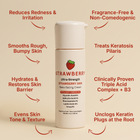
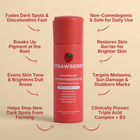
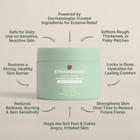
This is where TryStrawberry's Advanced Triple-Acid Complex for Keratosis Pilaris fits into a more complete skincare routine.
Instead of functioning as only a moisturizer, its advanced formula combines multiple exfoliating acids that are designed to help:
- reduce follicular buildup
- improve rough, uneven texture
- smooth the appearance of strawberry legs
- support healthier-looking skin over time
When paired with a consistent moisturizing routine, this type of multi-acid approach aligns with what many skincare professionals recommend for improving:
- strawberry skin treatment
- keratosis pilaris treatment
- kp treatment
- best treatment for keratosis pilaris
The goal isn't simply softer skin; it's healthier, smoother skin that looks better as well as feels better.
Myth vs. Fact
Myth: Expensive body lotion can cure strawberry skin.
Fact: Even premium lotions primarily hydrate the skin. They don't usually remove follicular buildup or keratin plugs.
Myth: If my skin feels soft, the strawberry skin is gone.
Fact: Softness and visible texture are different. Your skin can feel hydrated while bumps remain.
Myth: Scrubbing harder works better.
Fact: Over-scrubbing can damage the skin barrier and make strawberry skin more noticeable.
Myth: Moisturizer isn't important.
Fact: Moisturizing is essential—it simply works best when paired with gentle exfoliation.
Common Mistakes to Avoid
- Using only moisturizer without exfoliation
- Over-exfoliating with harsh scrubs
- Skipping moisturizer after exfoliating
- Changing products too frequently
- Expecting overnight results
FAQs
Why isn't my body lotion fixing my strawberry skin?
Because body lotion hydrates the skin but doesn't remove the keratin buildup and clogged follicles that commonly cause strawberry skin.
Do I need exfoliation if I already moisturize?
Yes. Hydration and exfoliation perform different functions, and most people benefit from both.
What's the best moisturizer for keratosis pilaris?
Look for products containing barrier-supporting ingredients such as ceramides, glycerin, or urea. Pair them with an exfoliating routine for the best results.
Can body lotion remove dark dots on my legs?
Body lotion may improve dryness, but dark follicular dots usually require exfoliation and consistent skincare.
How long does it take to improve strawberry skin?
Most people begin noticing smoother skin within 4–8 weeks, with continued improvements over 8–12 weeks of consistent care.
Is strawberry skin permanent?
No. While conditions like keratosis pilaris often require ongoing maintenance, a consistent routine can significantly improve the appearance of strawberry skin.
Final Thoughts
If your body lotion isn't fixing your strawberry skin, it doesn't necessarily mean you're using the wrong moisturizer.
More often, it means you're trying to solve a multi-layered skin concern with a product designed to do only one job.
Moisturizers are excellent at:
- hydrating skin
- strengthening the barrier
- improving comfort
But they don't remove clogged follicles, dissolve keratin buildup, or improve skin turnover on their own.
For smoother, healthier-looking skin, the most effective approach combines:
- gentle exfoliation
- daily hydration
- proper shaving habits
- barrier support
- long-term consistency
Rather than replacing your body lotion, think of it as one essential part of a complete skincare routine designed to address the underlying causes of strawberry skin.