


If you’ve been dealing with strawberry skin, you’ve probably asked yourself:
👉 “How long will this take to go away?”
Whether it’s strawberry legs, bumpy skin on arms, or chicken skin on legs, the biggest frustration isn’t just the condition—it’s the uncertainty.
- You try a keratosis pilaris moisturizer
- You switch to a new keratosis pilaris cream
- You exfoliate regularly
…but nothing seems to change fast enough.

So let’s get clear—with realistic, dermatologist-backed timelines.
👉 Short answer: Most people see improvement in 2–8 weeks, but full transformation can take 2–3 months or more, depending on consistency and severity.
In this guide, we’ll break down:
- Exact timelines for visible results
- Why progress feels slow
- What actually speeds up results
- The best treatment for keratosis pilaris and strawberry skin
- A step-by-step routine that works
Key Takeaways (Quick Summary)
- Visible improvement can start in 2–3 weeks
- Significant smoothing takes 4–8 weeks
- Long-term results require 8–12+ weeks of consistency
- Strawberry skin is not permanent, but it’s not an overnight fix
- Most people have a mix of keratosis pilaris (KP) and clogged follicles
- The fastest results come from combining:
-
- Chemical exfoliation
- Hydration
- Barrier repair

What Exactly Are You Trying to “Fix”?
Before timelines, it’s important to understand:
You’re not fixing just one issue.
Most cases of strawberry skin involve:
- Clogged pores (dark dots)
- Keratin buildup (keratosis pilaris)
- Dry skin
- Shaving irritation
That’s why searching for:
- best kp treatment
- strawberry legs treatment
- keratosis pilaris lotion
…often leads to partial results.
Because each product solves only one layer of the problem.
The Real Secret
It’s not:
❌ Fast
❌ Instant
❌ One-product solution
It is:
✅ Consistent
✅ Layered
✅ Science-backed
Realistic Timeline: Week-by-Week Breakdown
Let’s break this down into a realistic transformation journey.
Week 1–2: The Adjustment Phase
What happens:
- Skin starts responding to exfoliation
- Hydration improves softness
- No major visual change yet
You may notice:
- Slight smoothness
- Reduced dryness
- Mild irritation (if over-exfoliating)
👉 This is where most people quit.
Mistake:
Switching products too early.
Week 3–4: Early Visible Changes
Now things start shifting.
You’ll notice:
- Slight reduction in strawberry skin legs appearance
- Fewer dark dots
- Softer texture
If you have keratosis pilaris on arms or chicken skin on arms, bumps may feel less rough.
Week 5–8: Noticeable Improvement
This is where real progress happens.
- Bumps reduce significantly
- Skin tone becomes more even
- Pores look less visible
This stage reflects effective:
- keratosis pilaris treatment
- strawberry skin treatment
Week 8–12: Transformation Phase
At this point:
- Skin appears smoother
- Texture improves dramatically
- Strawberry legs become much less noticeable
However:
👉 You still need maintenance.
Because conditions like keratosis pilaris don’t disappear permanently.
Why Does It Take This Long?
1. Skin Turnover Cycle
Your skin renews every 28–45 days.
That means:
- Results can’t happen overnight
- You need at least one full cycle
2. Multiple Causes
You’re dealing with:
- Keratin buildup
- Oil oxidation
- Dryness
- Irritation
Fixing one doesn’t fix all.
3. Incorrect Routines
Many people rely on:
- Only a keratosis pilaris moisturiser
- Harsh scrubs
- Inconsistent care
This delays results significantly.
What Slows Down Results?
Common Mistakes
❌ Using only moisturizer
❌ Over-exfoliating
❌ Dry shaving
❌ Skipping routine
❌ Expecting instant results
Even the best lotion for keratosis pilaris won’t work if used alone.
What Speeds Up Results?
1. Chemical Exfoliation (Essential)
Helps:
- Clear follicles
- Reduce bumps
- Improve texture
Used in:
- kp skin treatment
- chicken skin treatment
2. Barrier Repair
A strong keratosis pilaris moisturizer or keratosis pilaris cream:
- Prevents irritation
- Supports healing
- Improves results
3. Consistency
More important than product choice.
👉 Daily care > expensive products
4. Smart Shaving
Avoid worsening strawberry legs:
- Use sharp razors
- Avoid dry shaving
- Always hydrate after

Step-by-Step Routine (How-To Guide)
Daily Routine
Morning
- Gentle cleanser
- Lightweight moisturizer
- SPF
Night
- Cleanse
- Apply chemical exfoliant (2–4 times/week)
- Use keratosis pilaris lotion or cream
Weekly Routine
- Avoid harsh scrubs
- Monitor skin sensitivity
- Adjust exfoliation frequency
Best Treatment for Keratosis Pilaris & Strawberry Skin
The most effective pilaris treatment includes:
Must-Have Elements
- Exfoliation (AHAs/BHAs)
- Hydration (ceramides, urea)
- Barrier support
Searching for:
- best cream for keratosis pilaris
- best lotion for keratosis pilaris
…is helpful, but incomplete.
Because:
👉 You need a system, not a single product.

A Smarter Approach to Treating Strawberry Skin & KP
Skincare is moving beyond single-function products toward multi-layered solutions that address texture at its root.
Instead of treating:
- keratosis pilaris treatment and
- strawberry skin treatment
As completely separate concerns, the focus now is on tackling both together—because in real skin, they almost always overlap.
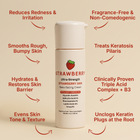
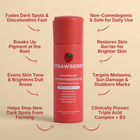
One example of this approach is the Advanced Triple-Acid Complex for Keratosis Pilaris from TryStrawberry.
This formulation is designed to support:
- Chemical exfoliation to help clear keratin buildup and clogged follicles
- Skin renewal to smooth rough, bumpy texture (chicken skin on arms, chicken skin on legs)
- Improved tone and clarity for visible reduction in strawberry legs
By combining multiple exfoliating acids, it aligns with what dermatology-backed routines recommend for effective:
- kp treatment
- keratosis pilaris skin treatment
- strawberry skin treatment
Rather than relying only on a keratosis pilaris moisturizer, solutions like this work as part of a broader system—pairing exfoliation with hydration and barrier support.
👉 Explore the product: Advanced Triple-Acid Complex for Keratosis Pilaris
Special Areas & Timelines
Keratosis Pilaris on Face
- Needs gentler treatment
- Slower but steady results
Chicken Skin on Arms
- Faster improvement (4–8 weeks)
- Responds well to exfoliation
Strawberry Skin Legs
- Slower due to shaving
- Takes 6–12 weeks
Keratosis Pilaris on Butt
- Moderate timeline (6–10 weeks)
- Requires consistency
Can You Permanently Get Rid of Strawberry Skin?
Reality Check
You can:
- Reduce it significantly
- Keep it under control
But:
👉 If you stop your routine, it can return.
FAQs
How long does it take to get rid of strawberry skin?
Most people see improvement in 2–8 weeks, with major results in 8–12 weeks.
What is the fastest way to treat strawberry legs?
Combine:
- Chemical exfoliation
- Hydration
- Proper shaving
What is the best treatment for keratosis pilaris?
The best treatment includes:
- Exfoliating acids
- A strong keratosis pilaris moisturizer
- Consistent routine
Can keratosis pilaris go away on its own?
Sometimes it improves with age, but usually requires kp treatment.
What causes chicken skin on legs?
It’s caused by keratin buildup in hair follicles.
Is there keratosis pilaris medication?
In severe cases, dermatologists may prescribe keratosis pilaris medication, but most cases are managed topically.
What is the best kp treatment?
The best approach combines:
- Exfoliation
- Hydration
- Barrier repair
Why is my strawberry skin not improving?
Likely reasons:
- Inconsistent routine
- Over-exfoliation
- Only using moisturizer
Final Thoughts
Getting rid of strawberry skin isn’t about finding a miracle product.
It’s about understanding:
👉 This is a multi-layer skin issue.
You’re dealing with:
- Follicles
- Keratin
- Oil
- Dryness
- Irritation
And once you treat all of these together, results follow.