

Why Hormones Play a Role in KP
Keratosis pilaris (KP) is mostly genetic — but hormones have a way of changing the story. From puberty to menopause, shifts in testosterone, estrogen, and progesterone can alter how your skin produces oil, retains moisture, and sheds keratin.
For a refresher on what KP actually is, check out Keratosis Pilaris Explained.
Puberty: When KP Often First Appears
Puberty brings an androgen surge (testosterone, DHEA) that increases both oil production and keratinization. The result?
- KP may first appear in teens.
- Existing bumps may feel rougher or more inflamed.
- Redness and irritation can overlap with acne.
It's not unusual for teens to juggle both acne and KP at once. While acne responds to different treatments, KP still comes back to the same basics: gentle exfoliation + moisture.
Want to understand the underlying family link? Read Genetics & KP: Why Some People Are Prone.

Pregnancy: The KP Wild Card
Pregnancy hormones are famous for changing skin — and KP is no exception.
- Estrogen + progesterone shifts can alter hydration and barrier function.
- Some notice worsening KP (extra dryness + keratin buildup).
- Others see improvement, possibly thanks to increased circulation and faster skin turnover.
Safe ingredients during pregnancy:
- Urea (gentle keratolytic, hydrates).
- Lactic acid (mild exfoliation, safe at low strengths).
- Niacinamide (barrier support).
- Shea butter & oatmeal (soothing moisturizers).
🚫 Avoid: retinoids and high-strength acids — they're not pregnancy-safe.
KP may not disappear, but simple, barrier-friendly care can keep texture calmer.
Postpartum & Breastfeeding: When Dryness Hits
After pregnancy, estrogen levels drop. That shift often makes skin feel drier, thinner, and more reactive.
- KP can return or feel more noticeable.
- Bumps may be less inflamed but rougher due to barrier weakness.
- Breastfeeding can also dehydrate the skin, making dryness more obvious.
Supportive moisturizers and safe keratolytics (like urea or lactic acid) help restore balance.
Adulthood & Later Life: The Long View
As you move into your 30s and 40s, many people notice KP naturally softens.
- Hair follicles mature, oil production stabilizes.
- Bumps often remain but look less red or inflamed.
- By midlife, KP is more about texture than irritation.
Menopause Changes
When estrogen declines, skin becomes thinner and drier. For some, this makes KP texture more noticeable again.
That's why menopausal KP often benefits from:
- Richer emollients (like shea or petrolatum).
- Regular exfoliation to keep bumps from building up.
Why Hormones Matter for KP
Hormones influence three major things that matter for KP:
- Keratinization rate → how quickly keratin plugs follicles.
- Skin barrier hydration → dryness makes bumps rougher.
- Inflammatory response → redness or dark spots after irritation.
This is why KP ebbs and flows with life stages. It isn't random — it's your skin responding to deeper hormonal rhythms.
What You Can Do at Any Stage
KP might change with hormones, but the basics of care remain the same:
- Exfoliation (gentle, chemical-based) → urea, lactic acid, salicylic acid.
- Moisturizers (barrier-loving) → ceramides, glycerin, shea butter.
- SPF → prevents dark spots where bumps once were.
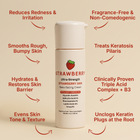
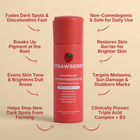
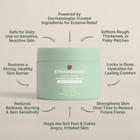
Strawberry's formula combines exfoliating acids with rich hydration to support KP texture whether you're in puberty, postpartum, or menopause.

Bottom Line
- KP is mostly genetic, but hormones shape how it looks and feels.
- Puberty can trigger or worsen bumps.
- Pregnancy/postpartum may flare or calm KP depending on your skin.
- In adulthood, KP often softens — though dryness at menopause can make texture more noticeable again.
- No matter your age, consistent care with exfoliation + hydration keeps skin smoother.
Dermatologist-tested • Safe for pregnancy • Made for KP-prone skin
Disclaimer: This article is for information only and isn't medical advice. Always consult a qualified healthcare provider for concerns about your skin.