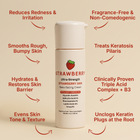
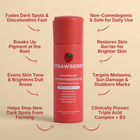
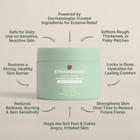


Keratosis Pilaris treatment, KP treatment, and the right keratosis pilaris moisturizer are common concerns for anyone dealing with rough, bumpy skin on the arms, thighs, buttocks, or other areas of the body. If you have tried a keratosis pilaris cream or keratosis pilaris lotion containing a single exfoliating acid but still have persistent bumps, rough texture, or visible pores, you may wonder whether your routine is missing something.
This is where multi-acid formulas come into the conversation.
A well-formulated triple-acid treatment combines different exfoliating acids that can target different aspects of rough, congested skin. Instead of relying on just one exfoliating mechanism, a combination can be designed to address surface buildup, follicular congestion, and uneven texture together.
That does not automatically mean that every triple-acid product is better than every single-acid lotion. The concentration, formulation, skin tolerance, and consistency of use all matter. However, combining complementary acids can make sense for keratosis pilaris, particularly when your main concerns include persistent bumps and rough texture.

Quick Answer: Are Triple-Acid Formulas Better for KP?
Triple-acid formulas can provide a more comprehensive approach to keratosis pilaris treatment because different acids can perform different exfoliating roles.
For example, a formula containing glycolic acid, lactic acid, and salicylic acid combines alpha hydroxy acids (AHAs) with a beta hydroxy acid (BHA). Glycolic and lactic acids primarily work on the skin's surface, while salicylic acid is oil-soluble and can work within the follicular environment.
This can make a multi-acid formula particularly appealing for people dealing with:
- Rough, uneven skin texture
- Small follicular bumps
- Chicken skin on arms
- Chicken skin on legs
- Strawberry skin
- Strawberry legs
- Visible pores
- Keratin buildup
- Persistent KP that has not responded well to a single active
The key is not simply using more acids. It is using complementary ingredients in a formulation your skin can tolerate consistently.
What Causes Keratosis Pilaris in the First Place?
To understand why different acids can be useful, it helps to understand what is actually happening with KP.
Keratosis pilaris is a common skin condition characterized by tiny, rough bumps that typically appear on the upper arms and thighs. The bumps develop when dead skin cells accumulate and plug hair follicles.
This is why KP can feel like:
- Sandpaper-like skin
- Tiny grains under the skin
- Rough bumps
- Small clogged pores
- "Chicken skin"
Dryness can also make the bumps more noticeable.
The problem, therefore, is not simply that your skin needs "more moisture." A good routine needs to balance exfoliation and moisturization.
The American Academy of Dermatology lists ingredients such as alpha hydroxy acids, glycolic acid, lactic acid, salicylic acid, retinoids, and urea among the ingredients that may be used to improve KP.
That gives us an important clue: there isn't one universally superior exfoliating ingredient for every person with KP.
Single-Acid KP Lotions: Why They Can Stop Feeling Effective
A single-acid keratosis pilaris lotion isn't necessarily a bad product.
In fact, single-active products can be excellent for people who:
- Have mild KP
- Have sensitive skin
- Are new to chemical exfoliation
- Need a simple routine
- Respond well to one particular acid
For example, lactic acid has evidence supporting its use in KP. One clinical study comparing 10% lactic acid with 5% salicylic acid found significant reductions in KP lesions with both treatments after 12 weeks, with the lactic acid group showing a greater average reduction in that particular study.
So why consider multiple acids?
Because KP is not one-dimensional.
A person may simultaneously have:
Surface buildup + follicular plugging + rough texture + dryness + uneven appearance.
A single acid may be particularly good at one part of that picture, while a carefully formulated combination can address several aspects at once.
Why Triple-Acid Formulas Can Be More Comprehensive
The biggest advantage of a triple-acid formula is complementarity.
Instead of asking one acid to do everything, a formula can combine acids with different properties.
A common combination is:
Glycolic Acid + Lactic Acid + Salicylic Acid
Each brings something different to the formulation.
1. Glycolic Acid: Surface Texture
Glycolic acid is an alpha hydroxy acid (AHA).
It helps loosen the bonds between dead skin cells, encouraging exfoliation of the outermost layers of the skin.
For KP-prone skin, this can help improve the appearance of:
- Rough texture
- Dullness
- Uneven skin
- Surface buildup
Glycolic acid has also been studied specifically for KP, including clinical research showing improvements in follicular keratotic papules with high-concentration glycolic acid treatments.
However, high-strength glycolic acid treatments used in clinical settings are very different from an at-home body lotion. Concentration and formulation matter considerably.
2. Lactic Acid: Exfoliation + Moisture Support
Lactic acid is another AHA frequently used in keratosis pilaris treatment.
One reason it is popular in body-care formulas is that it combines exfoliating properties with humectant activity, making it useful for skin that is both rough and dry.
This matters because excessive dryness can make KP look and feel worse.
The AAD specifically lists lactic acid among the ingredients commonly used in moisturizers and treatments for KP.
Clinical research has also demonstrated that lactic acid can significantly reduce KP lesions.
3. Salicylic Acid: Follicular Exfoliation
Salicylic acid is a beta hydroxy acid (BHA).
Unlike AHAs, salicylic acid is oil-soluble, which gives it different behavior on the skin and makes it particularly useful in formulas targeting clogged or congested follicles.
Because KP involves keratin buildup within hair follicles, salicylic acid is a logical ingredient for a KP-focused exfoliating formula.
The AAD lists salicylic acid among the keratolytic ingredients that may be used to improve the appearance of KP.
Triple-Acid vs. Single-Acid: What's the Difference?
Think of it this way:
|
Single-Acid Formula |
Triple-Acid Formula |
|
Relies mainly on one exfoliating mechanism |
Uses multiple complementary exfoliating mechanisms |
|
Simpler formulation |
More comprehensive formulation |
|
Can be easier for beginners |
Can target multiple texture concerns |
|
Useful for people who respond well to one acid |
May be useful for stubborn or multi-factor texture concerns |
|
Often easier to control for sensitive skin |
Requires more attention to formulation and tolerance |
The important point is that more acids do not automatically mean better results.
A poorly formulated triple-acid product can be more irritating than a well-formulated single-acid product.
The goal is not maximum exfoliation.
The goal is effective exfoliation that your skin can tolerate consistently.
Why Different Acids May Work Better Together
KP can present differently from person to person.
Someone may primarily have tiny rough bumps. Another person may have more noticeable follicular plugging. Someone else may have roughness combined with dryness and visible discoloration.
That variation is one reason a combination approach can be useful.
A triple-acid formula can theoretically create a more balanced exfoliation strategy:
Glycolic acid → surface exfoliation
Lactic acid → exfoliation + hydration support
Salicylic acid → follicular-focused exfoliation
Together, these ingredients can address different components of rough, bumpy skin.
This is more nuanced than simply saying that "three acids are three times stronger."
They are not.
The value comes from different mechanisms working within the same routine.
Why a Triple-Acid Formula May Help When Your KP Lotion Isn't Working
If you've been using a single-active keratosis pilaris moisturizer for several weeks without seeing enough improvement, there may be several reasons.
Your Main Concern May Not Be Dryness Alone
A traditional moisturizer can soften dry skin without sufficiently addressing the keratin plugs responsible for KP.
This is why a moisturizer for KP may benefit from including a keratolytic ingredient.
The AAD recommends combining gentle exfoliation or a keratolytic with moisturization rather than relying on aggressive scrubbing.
Your Skin May Need More Than One Exfoliating Action
If one acid improves your skin but leaves certain concerns behind, switching to or incorporating a carefully formulated multi-acid product may provide broader coverage.
For example, you might notice:
- Smoother skin but persistent bumps
- Fewer bumps but remaining roughness
- Improved texture but visible pores
- Reduced roughness but recurring buildup
A combination formula is designed around the idea that these concerns can overlap.
You May Be Expecting Instant Results
KP generally requires consistency.
The AAD notes that improvement can take several weeks and that maintenance is often necessary because KP tends to recur.
So even a well-formulated KP treatment isn't something that should necessarily be judged after a few applications.
Triple-Acid Does Not Mean Triple the Exfoliation
This distinction is extremely important.
A triple-acid formula should not be thought of as:
1 acid = mild
3 acids = three times stronger
Skin doesn't work that way.
The final effect depends on:
- Acid type
- Concentration
- pH
- Formula
- Delivery system
- Frequency of use
- Other ingredients
- Individual skin sensitivity
A thoughtfully formulated combination can actually be designed to deliver complementary benefits without requiring extremely high concentrations of one ingredient.
This is why formulation matters just as much as the ingredient list.
Can Triple-Acid Formulas Help Strawberry Skin Too?
Potentially, yes, depending on what is causing the appearance.
Strawberry skin and strawberry legs can refer to visible dark pores or follicular dots, often associated with shaving, follicular plugging, keratin buildup, or other causes.
Because not every dark pore is KP, it's important to identify the underlying issue rather than assuming every case is the same.
If follicular buildup and rough texture are contributing to the appearance, exfoliating ingredients may help improve the skin's texture and appearance.
However, redness, painful bumps, pus-filled lesions, or persistent inflammation may point toward folliculitis or another condition rather than straightforward KP.
Why Moisturization Still Matters in a Triple-Acid Routine
One of the biggest mistakes people make with keratosis pilaris treatment is focusing exclusively on exfoliation.
Acids can help remove excess dead skin cells, but over-exfoliating can leave skin dry and irritated.
That's why a good KP routine should include both:
Exfoliation + moisturization
The AAD recommends moisturizing after using a keratolytic because exfoliating treatments can increase dryness.
A well-designed keratosis pilaris cream or lotion may therefore combine exfoliating ingredients with moisturizing and barrier-supportive ingredients.
This is particularly useful for people whose KP becomes more noticeable when their skin is dry.
What Makes a Good Triple-Acid KP Formula?
If you're comparing products, don't look only for the words "triple acid."
Look at the complete formula.
A good keratosis pilaris cream or KP lotion should ideally consider:
Complementary acids
Look for acids that provide different exfoliating functions rather than simply stacking similar ingredients.
Appropriate concentration
Higher isn't automatically better.
The right concentration should be effective while remaining tolerable enough for consistent use.
Skin-supportive ingredients
Because acids can contribute to dryness, moisturizing ingredients can make the overall formula more comfortable.
A sensible usage schedule
Using an acid formula more frequently than recommended does not necessarily accelerate results.
It may simply increase irritation.
Long-term usability
KP commonly requires maintenance. A product that you can comfortably use consistently is often more valuable than an aggressive treatment that leaves your skin irritated.
How to Use a Triple-Acid KP Treatment
If you're introducing a multi-acid product into your routine, start conservatively.
Step 1: Apply to clean, dry skin
Follow the product's instructions and apply the recommended amount to the areas affected by KP.
Step 2: Don't aggressively scrub
Physical scrubbing can irritate KP-prone skin.
The AAD specifically warns that aggressive scrubbing can worsen irritation and recommends gentle exfoliation instead.
Step 3: Moisturize
Follow with a suitable keratosis pilaris moisturizer or body moisturizer if the formula does not already provide enough hydration.
Step 4: Start gradually if needed
If you're new to acids or have sensitive skin, begin according to the product's lower-frequency recommendation rather than immediately using it every day.
Step 5: Give your skin time
Don't judge a KP treatment after only a few applications.
Consistent use over several weeks is more meaningful.
Who May Prefer a Single-Acid KP Lotion?
Triple-acid isn't automatically the best choice for everyone.
A single-acid keratosis pilaris lotion may be preferable if:
- Your KP is mild
- Your skin is sensitive
- You are new to chemical exfoliation
- You already know which acid works well for you
- You're using another exfoliating active
- You want a very simple routine
For some people, a single well-formulated lactic acid or salicylic acid product may be all they need.
In fact, clinical evidence supports both lactic acid and salicylic acid as useful topical options for KP.
Who May Consider a Triple-Acid Formula?
A multi-acid approach may be worth considering if you have:
- Persistent roughness
- Recurring follicular bumps
- KP on large body areas
- Rough arms or thighs
- Chicken skin
- Chicken skin on arms
- Chicken skin on legs
- Visible pores
- Uneven body texture
- Strawberry-looking pores associated with follicular buildup
- Limited improvement from a single-acid product
The key is still skin tolerance.
If your skin becomes persistently red, burning, painful, cracked, or unusually irritated, reduce use or stop the product and reassess your routine.
Can Triple-Acid Formulas Get Rid of KP Permanently?
No skincare formula can guarantee a permanent cure for keratosis pilaris.
KP is a chronic, recurring skin tendency for many people, and maintenance may be needed to keep the bumps under control. The AAD specifically notes that treatment does not cure KP and that a maintenance plan may be necessary.
The realistic goal is:
Smoother + softer + more even-looking skin with fewer noticeable bumps.
That is a much better expectation than assuming a product will permanently eliminate KP.
Triple-Acid KP Treatment: The Bottom Line
A single acid can be effective for keratosis pilaris, but a thoughtfully formulated triple-acid product can offer a more comprehensive approach by combining different exfoliating mechanisms.
A combination such as glycolic acid + lactic acid + salicylic acid can address different aspects of rough, bumpy skin:
- Glycolic acid helps with surface exfoliation and texture.
- Lactic acid provides exfoliation while supporting the needs of dry skin.
- Salicylic acid offers a different, follicular-focused exfoliating mechanism.
The evidence supports several individual acids for KP, but there is not enough evidence to claim that every triple-acid formula will outperform every single-acid product. The advantage of a multi-acid formula is primarily its complementary approach, not simply having more acids.
For stubborn chicken skin, strawberry skin, rough arms, rough thighs, and KP-prone body skin, the most effective routine is usually the one that combines appropriate exfoliation with moisturization and consistent use.
Try a Multi-Active Approach for Rough, Bumpy Skin
If you're looking for a targeted KP skin treatment that goes beyond a single exfoliating ingredient, a multi-acid body formula can be a useful option for improving rough texture and visible follicular buildup.
For best results, use exfoliating products according to their directions and give your skin enough time to adjust.
FAQs About Triple-Acid KP Treatments
Is a triple-acid formula better than a single-acid KP lotion?
Not necessarily for everyone. A triple-acid formula can provide complementary exfoliating actions, but a single acid may work very well depending on your skin and the severity of your KP.
Which acids are best for keratosis pilaris?
Commonly used acids include lactic acid, glycolic acid, and salicylic acid. The AAD lists these among ingredients that can help improve KP.
Can I use a triple-acid formula every day?
That depends on the specific product and your skin's tolerance. Follow the manufacturer's directions and reduce frequency if you experience dryness or irritation.
Does salicylic acid help chicken skin?
Salicylic acid is one of the keratolytic ingredients used for KP and can help reduce the buildup of dead skin cells associated with rough follicular bumps.
Is glycolic acid good for KP?
Glycolic acid is an AHA that can help exfoliate the skin's surface, and it has been studied as a treatment option for keratosis pilaris.
Does lactic acid help keratosis pilaris?
Yes. Lactic acid is commonly used for KP, and clinical research has found significant improvement in KP lesions with topical lactic acid.
Should I moisturize after using acids for KP?
Generally, yes. Moisturization is an important part of KP care because exfoliating treatments can contribute to dryness.
How long does KP treatment take to work?
Results vary, but KP usually requires consistent treatment rather than overnight improvement. The AAD notes that people may need several weeks to assess improvement and often need ongoing maintenance.
Final Thoughts
The biggest advantage of a triple-acid formula isn't simply that it contains three acids. It's that different acids can be selected to perform different but complementary jobs.
For someone dealing with persistent keratosis pilaris, chicken skin, strawberry skin, rough arms, or rough thighs, this can provide a more comprehensive exfoliating strategy than relying on one active alone.
But effective KP care is about balance. Exfoliate enough to address keratin buildup, moisturize enough to support comfortable skin, avoid aggressive scrubbing, and stay consistent.
That's what turns a complicated ingredient list into a practical keratosis pilaris treatment routine.