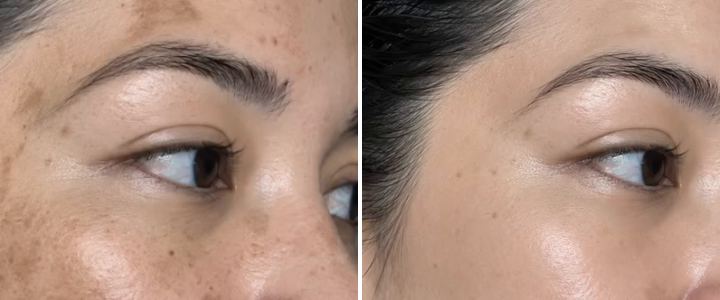
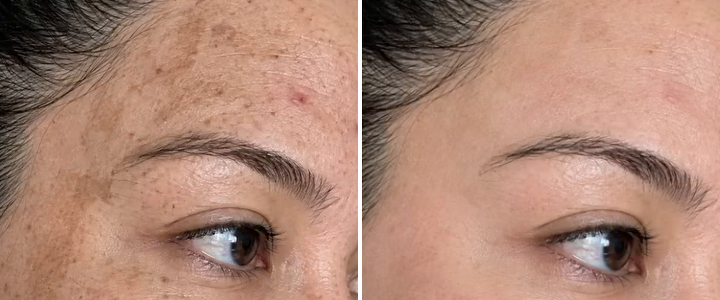
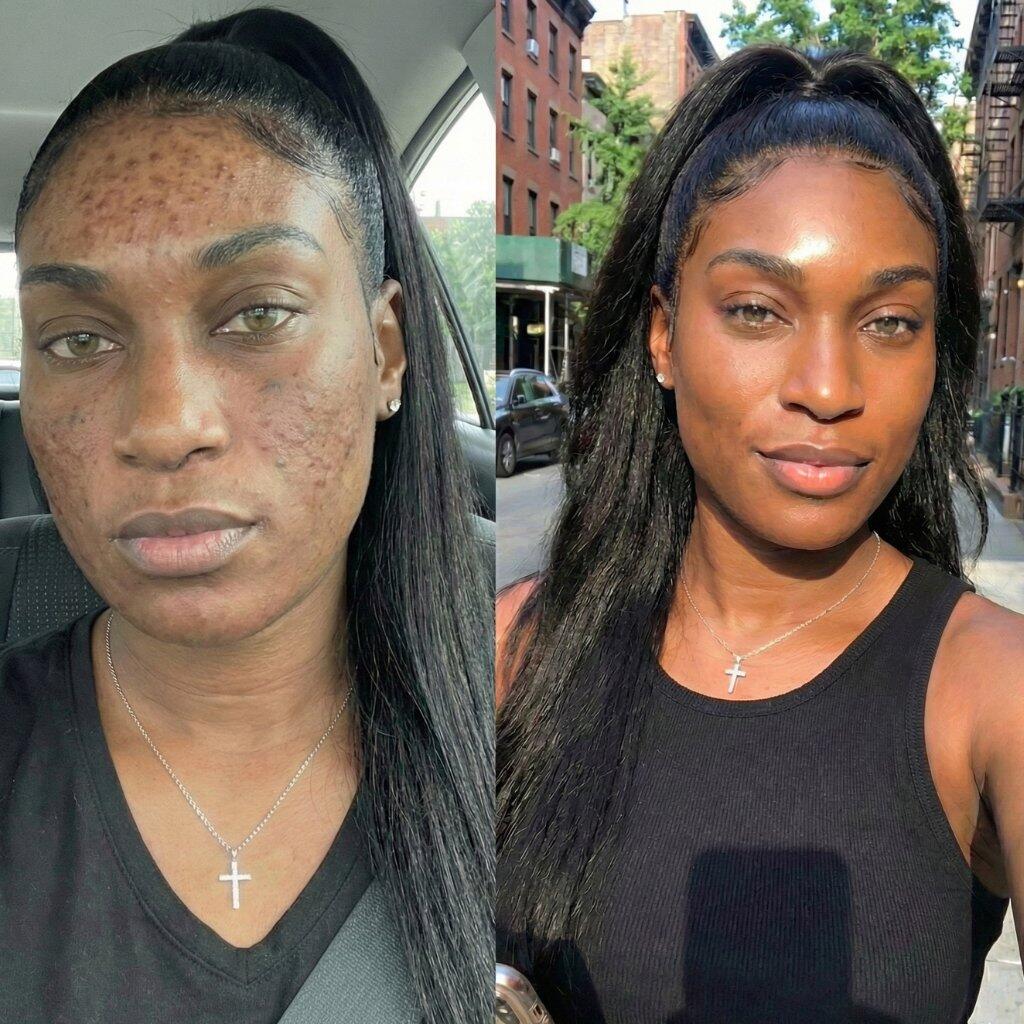
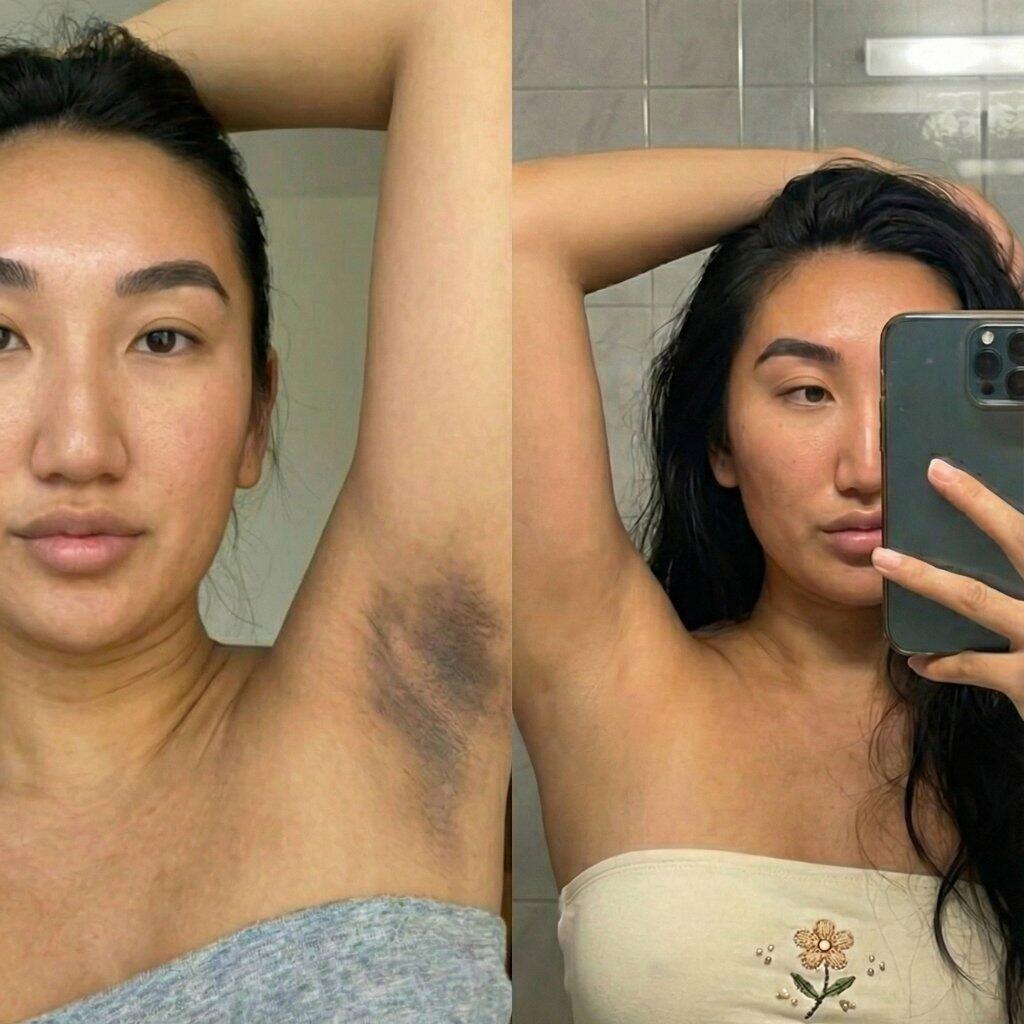
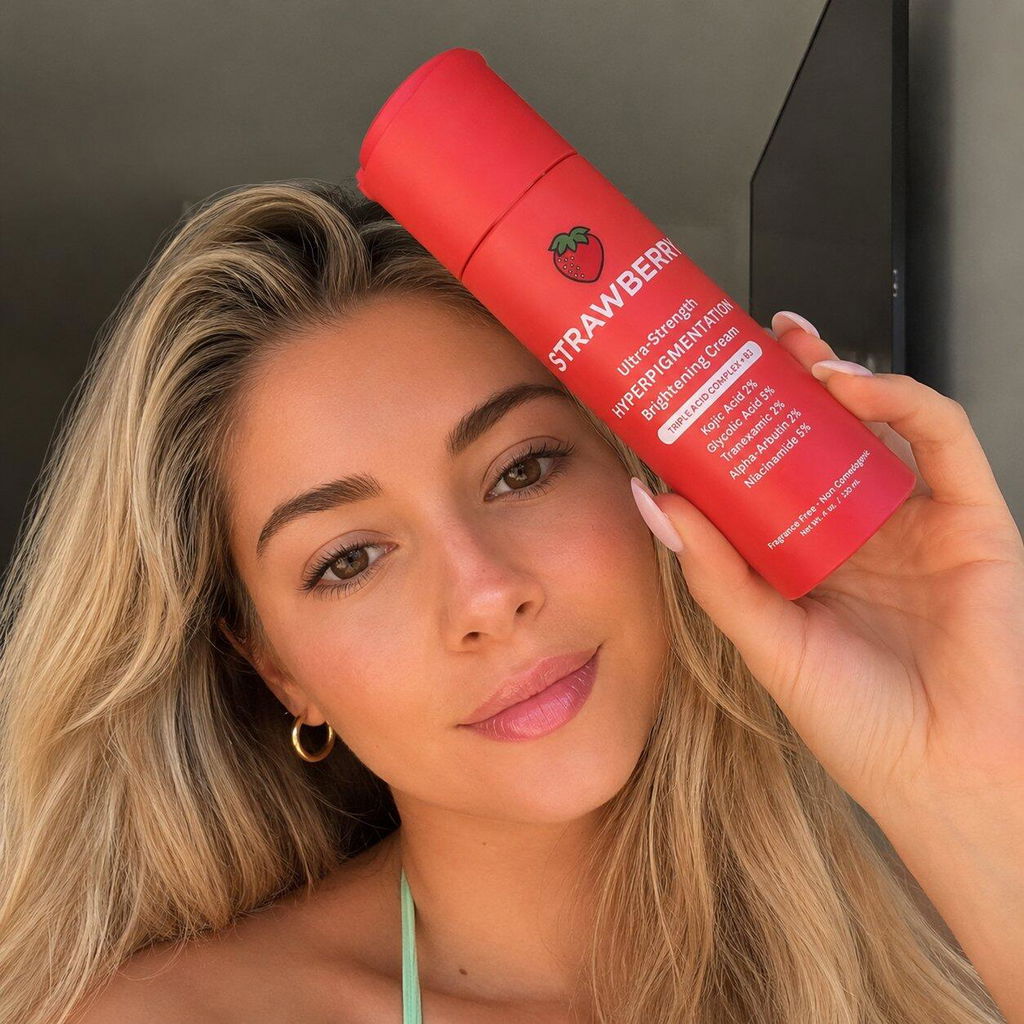
Visibly clear Melasma patches in as little as 30 days
For the patches on your cheeks, forehead and upper lip that keep coming back, even after hydroquinone.
–Blocks melanin at the source
–Fades patches, tone and texture
–Treats the hormonal cause
–One step, replaces your entire routine
Low in stock, 6 left
Switch to a subscription and save 51% & free shipping
Single Bottle51% OFF
Autoships Every Month
Rs. 3,200Rs. 6,500
1,651 people are viewing this right now
60-day full refund guarantee and keep the bottle
Only buy on the official Strawberry® website.
“I tried EVERYTHING for the melasma on my cheeks. My dermatologist recommended this and within a few weeks the patches started lifting. Now I leave the house without concealer.”
★★★★★
Yasmin A.
Verified purchase
How to Use
1Apply to clean, dry skin. For best results, use after showering.
2Massage gently until fully absorbed.
3Use twice daily. Sensitive skin may start every other day.
4Follow with sunscreen during daytime use.
Wear sunscreen daily. Acids increase sun sensitivity while you're using them and for a week after, and sun is what brings pigmentation back.
Ingredients
5%Glycolic AcidPenetrates deeper than other AHAs to break down excess pigment and speed up cell turnover.
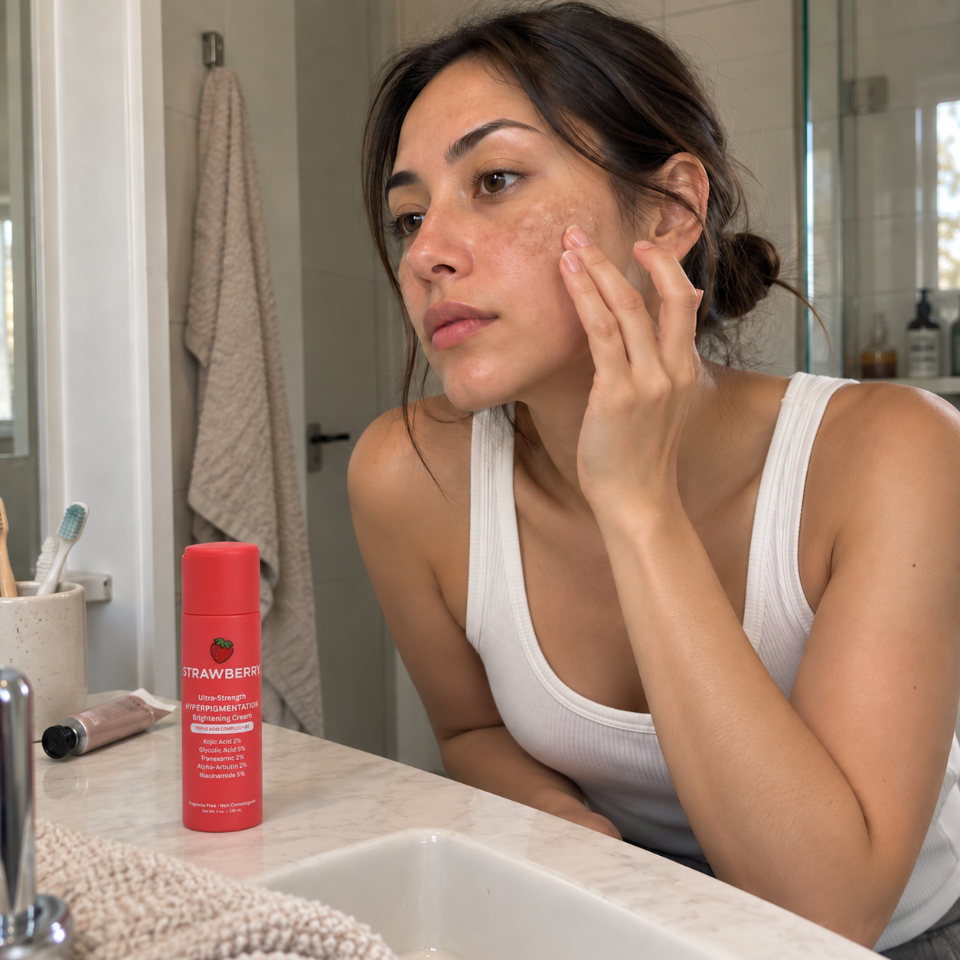
2%Kojic Acid DipalmitateReduces melanin production at the source, fading dark spots and brightening uneven tone.
2%Tranexamic AcidInterrupts hormonal and UV-triggered pigmentation signals.
2%Alpha-ArbutinBlocks tyrosinase activity, reducing dark patches and preventing new ones forming.
5%NiacinamideStrengthens the barrier and reduces redness or irritation from the actives.
4 oz / 120 ml. Made in the USA in an FDA-registered facility. Dermatologist-tested, non-comedogenic, paraben-, sulfate- and phthalate-free.
FAQ
Where can I use it?
Anywhere melasma shows up: cheeks, forehead, upper lip and jawline. It also works on dark patches elsewhere on the body.
How long until I see results?
Many customers see dark patches visibly fade in as little as 2 weeks, with brighter, more even tone by week 4 and full results over 8 to 12 weeks.
Is it safe to use on my face every day?
Yes. It's non-irritating and dermatologist-tested, with no harsh bleaches, so it's gentle enough for daily use on your face.
How often should I use it?
Twice daily on clean, dry skin. If your skin is very sensitive, start every other day and build up.
How is it different from hydroquinone?
Hydroquinone can thin the skin. This is a multi-acid, barrier-repairing blend built for long-term use, so it fades pigment without rebound darkening.
What if it doesn't work for me?
You have 60 days for a full refund. Keep the bottle, no return needed.
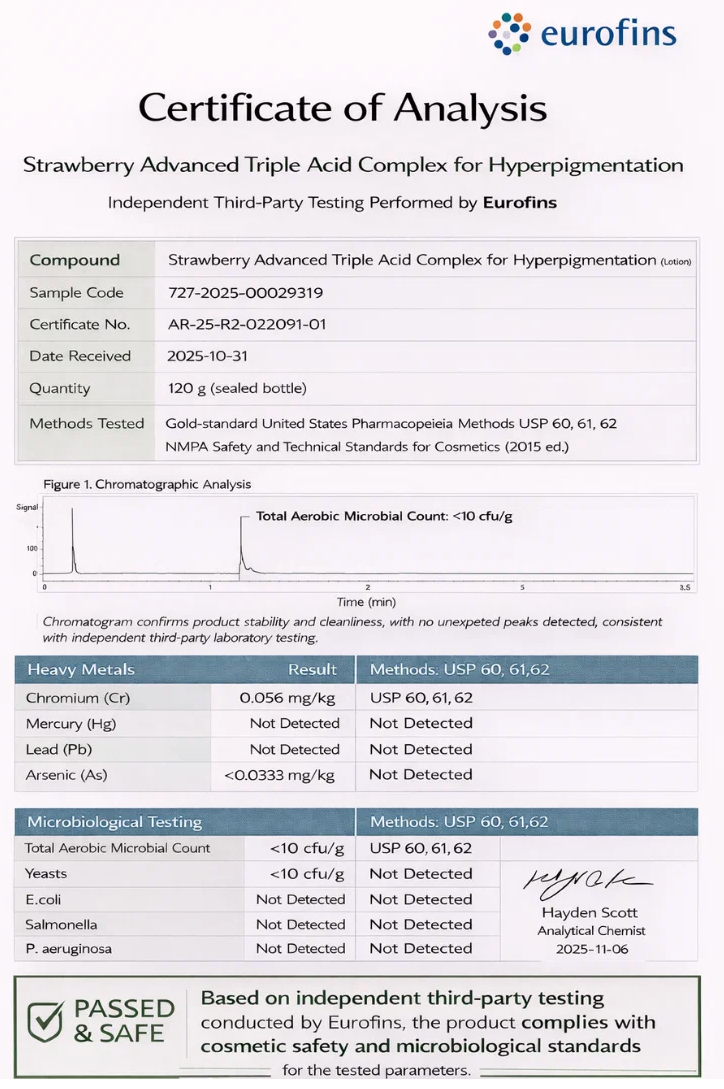
Eurofins Certificate of Analysis
Published for every batch. Independently tested by Eurofins, one of the largest testing laboratories in the world.
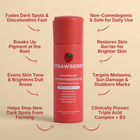
Cellular-Level Triple Acid Complex
Low in stock, 6 left
Rs. 3,200Rs. 6,500
What makes it different
Treats All Five Stages of Melasma, Not Just the Patch You See
Vitamin C brightens. Hydroquinone bleaches. Neither stops the signal that keeps making new pigment, which is why melasma fades for a few weeks and comes right back.
The Triple Acid Complex treats all five causes of hyperpigmentation in one daily step.
Clears the surface pigment already there
Blocks melanin production at the source
Interrupts the hormonal trigger behind it
Rebuilds the barrier for daily use
Calms the inflammation that darkens marks
Clinically tested
Clinically Proven to Fade Melasma Patches
Not a survey. Women with moderate to severe hormonal pigmentation, tested independently.
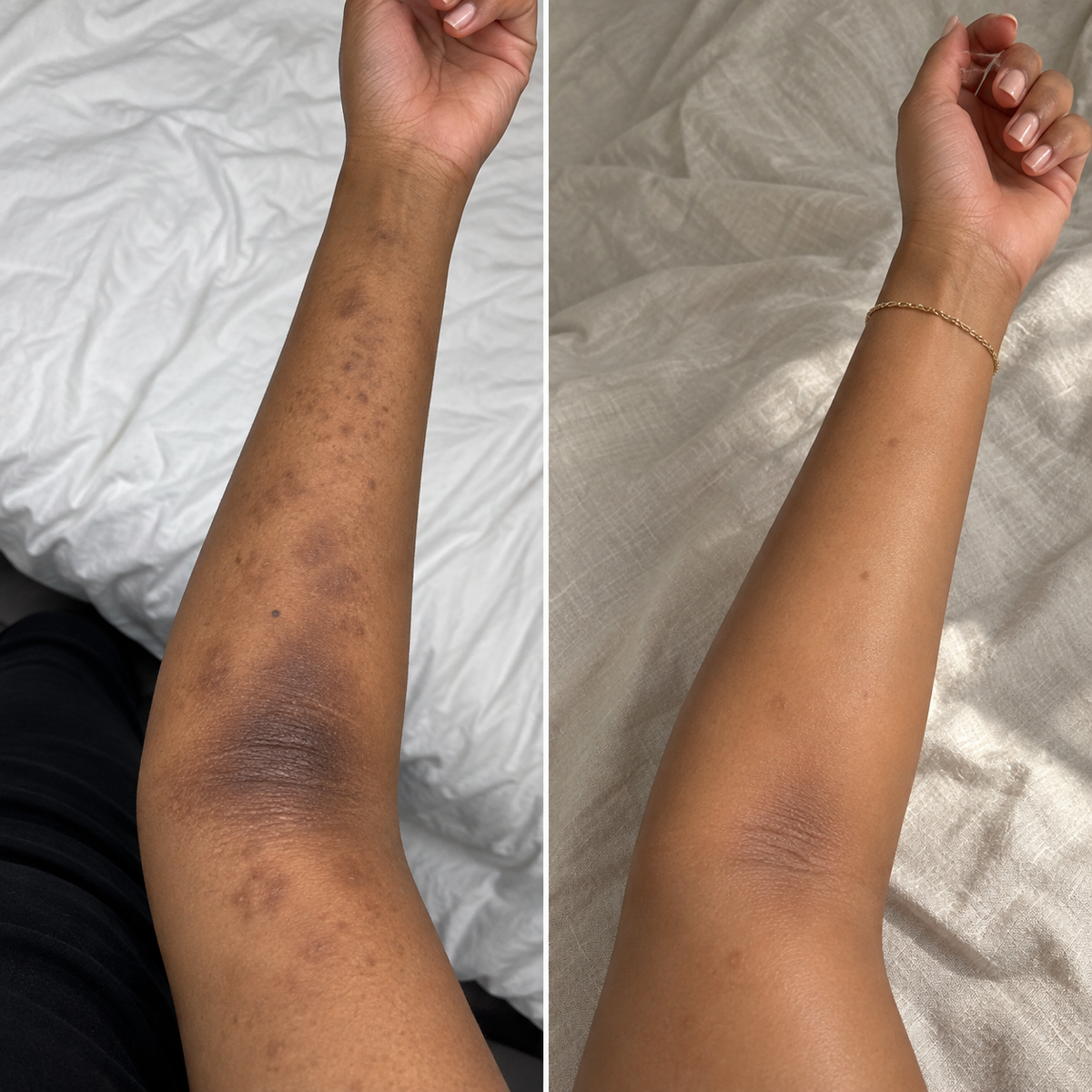
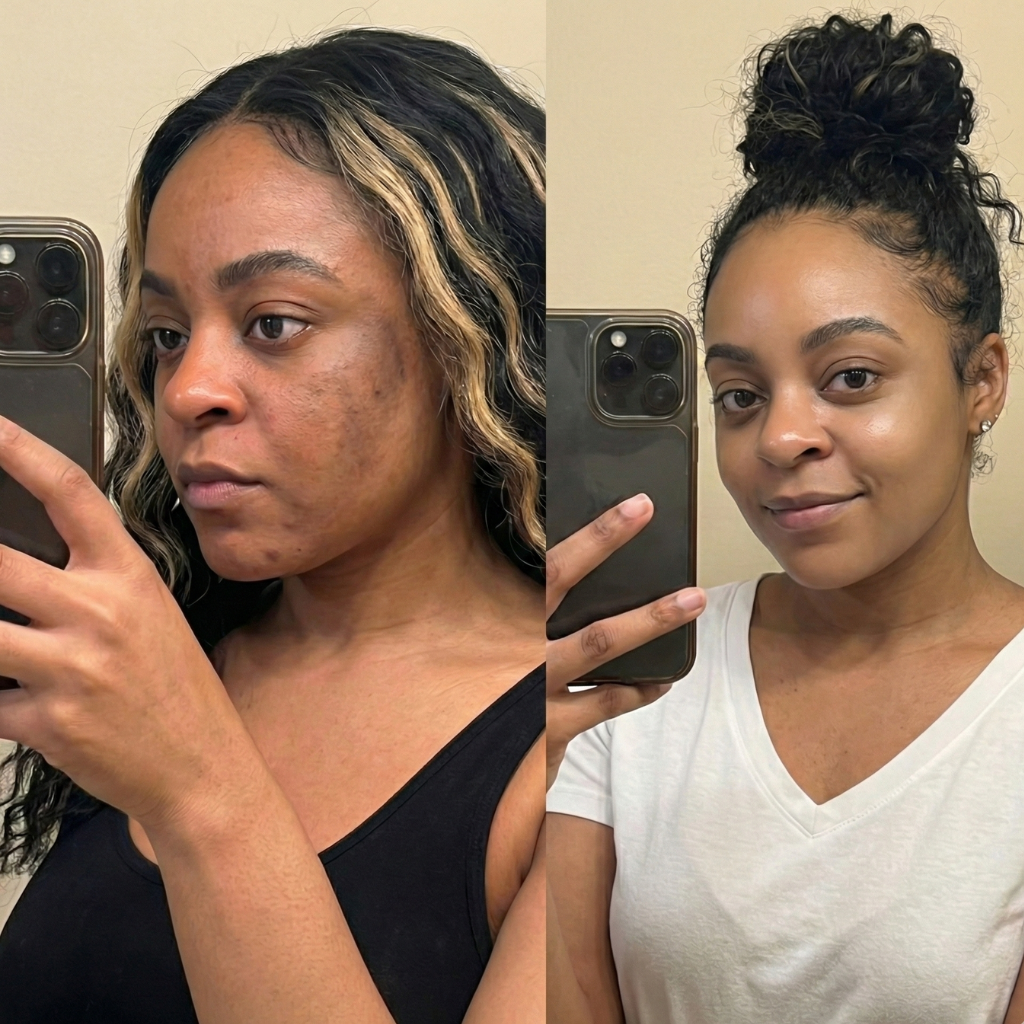
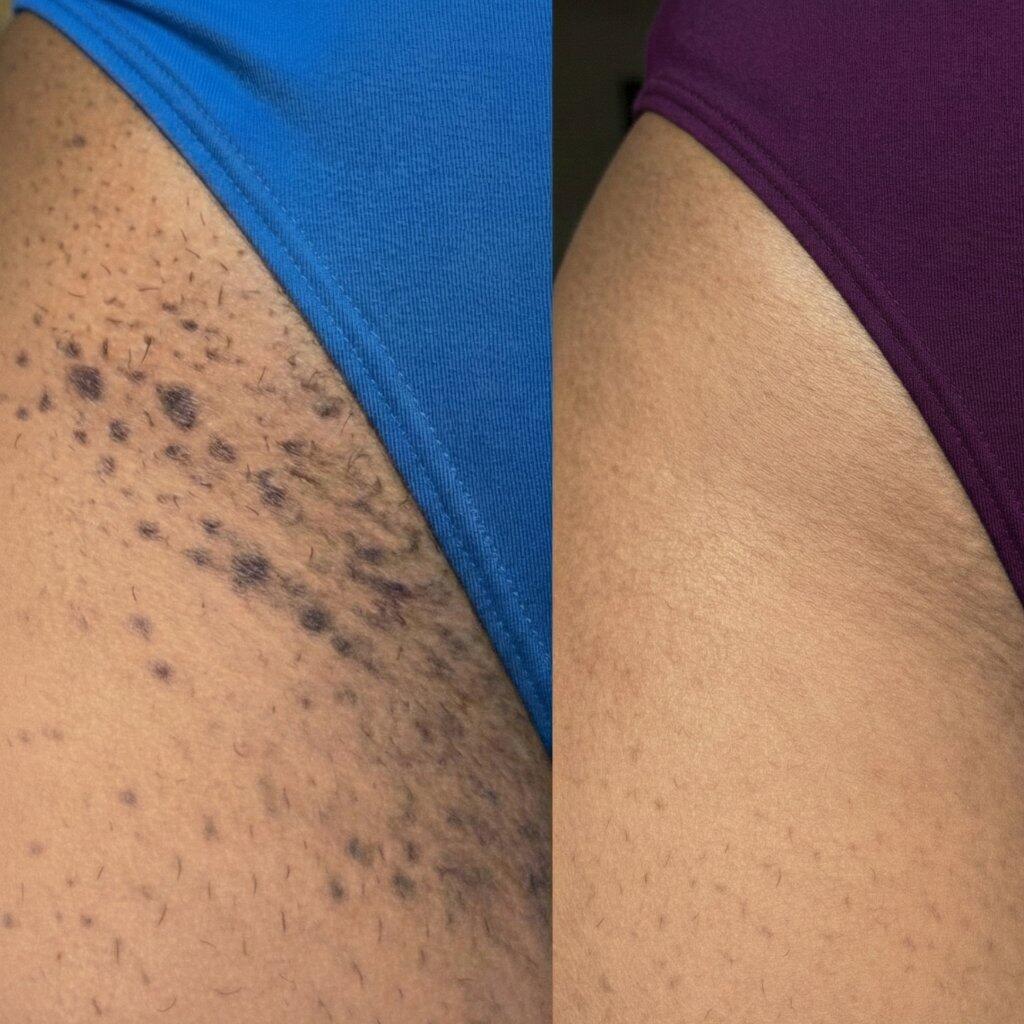
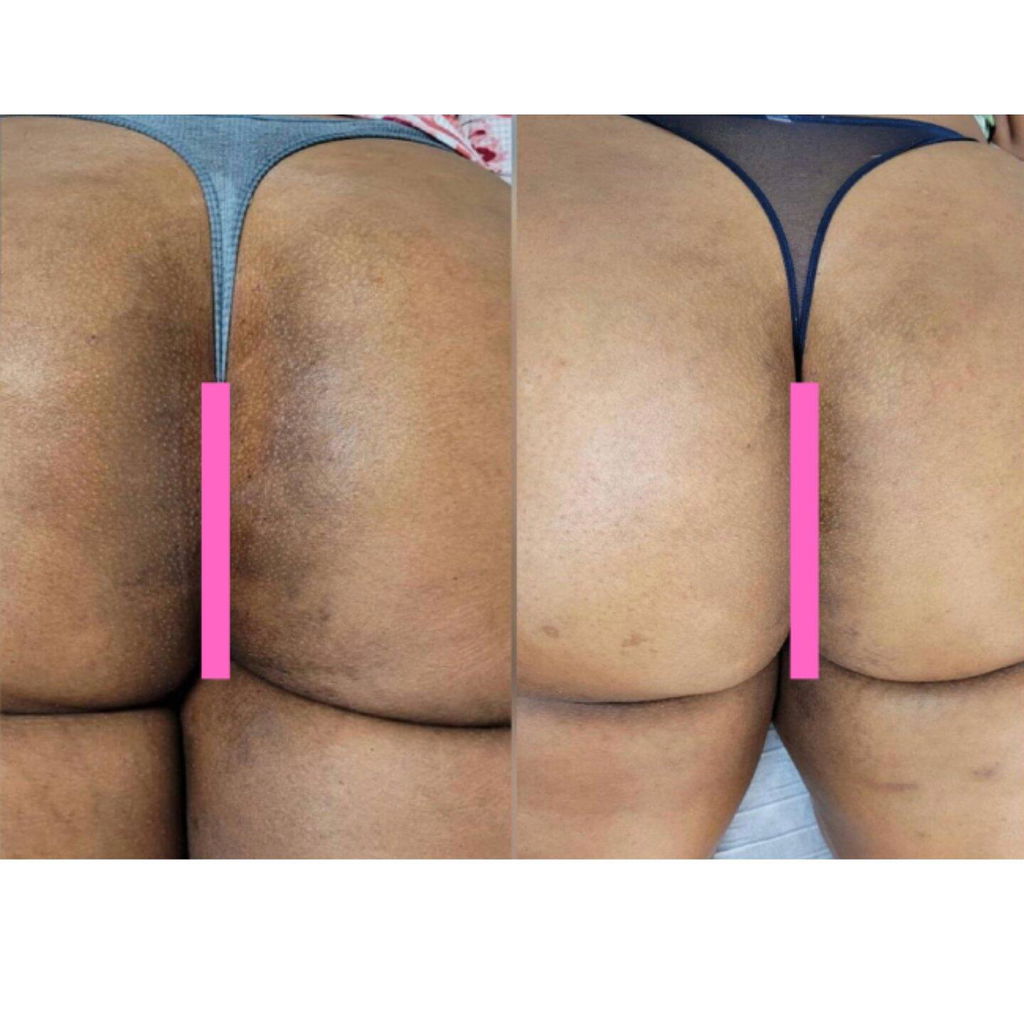
Photos sent in by customers. No retouching, same lighting, same distance.
The melasma across my cheeks came back every summer. Two weeks in, the patches are finally lifting. Really gentle too, it didn't break me out.
★★★★★Keiko M., 29Verified purchase
Hydroquinone faded it once and it came straight back darker. Three weeks on this and it's lighter than it has been in years.
★★★★★Anh V., 33Verified purchase
I've had melasma on my cheeks since my second pregnancy. After four weeks it has lightened so much I can actually see the difference. Nothing has ever worked this fast or this gently.
★★★★★Soo-jin P., 34Verified purchase
How it compares
The Only Formula That Treats Melasma at Every Stage
Strawberry's Triple Acid Complex vs. the hydroquinone and retinoid routes most women try first.
ngl i was about to bleach my coochie bc this has bothered me forever lol. I’ve never seen my kitty look this pretty. I feel like gatekeeping this 😬
S
Simone
my cheeks finally matching the vibe
This cream saved my A$$ LITERALLY lmao. Have you seen my before?? In between my cheeks were darker than a black hole. It was my biggest insecurity. I’m about to be wearing the sexiest bikinis y’all have ever seen this summer.
T
Tiara J.
skin looking filtered irl
went from looking like I’ve got a chocolate chip map on my face to having glass skin 😬. Really gentle too. didn’t break me out or nothing.
S
Sylvie
treatment that ACTUALLY did something omg
Ok so my dark underarm girlies all know how self conscious you get when you’re in a dress or tank top. I’ve tried a sh*t ton of treatments and this made my underarm bright as a light in weeks lol. See for yourself!! 🥰
A
Ashley
OBSESSED!! Guys this is worth every penny
I keep coming back to it. Tried a whole bunch of products for my hyperpigmentation, but this is the one my skin likes most. I was so ready to use that money back guarantee if it didn’t work lol. Oops that’s the Karen in me 🫣
In the clinical study, 87% saw dark patches visibly fade in 2 weeks and 92% reported brighter, more even tone by week 4.
Full visible improvement usually lands between weeks 8 and 12, depending on how deep the pigmentation is.
Why has nothing worked for my hyperpigmentation before?
Most over-the-counter products only target surface pigmentation. They lift the stain that is already there and do nothing about what keeps producing it.
This formula is built for the hormonal and inflammatory pathways behind PCOS-related pigmentation, which is why the patches stop coming back.
How is this different from hydroquinone or retinoids?
Hydroquinone can thin the skin and retinoids can cause peeling, and both are hard to stay on long term.
This uses a multi-acid, barrier-repairing blend designed for sustainable daily use, so it reduces pigmentation without triggering rebound darkening.
Can I use it on intimate or high-friction areas?
Yes. It was developed for sensitive facial skin, including the cheeks, forehead and upper lip.
It is non-irritating, dermatologist-tested and contains no harsh bleaches, so there is no stinging on delicate skin.
What actually causes PCOS-related dark patches?
Two things running together. Hormonal imbalance and insulin resistance push the skin to overproduce melanin, and chronic inflammation weakens the barrier so the discoloration sets in deeper and lasts longer.
It is not dirt, it is not something you did, and no amount of scrubbing reaches it.
Is it safe for sensitive skin?
Yes. The niacinamide rebuilds the barrier while the acids work, so it does not strip the skin the way a bleaching cream does.
If your skin is very reactive, start every other day and build up as it adjusts.
Will it help with dark marks left by shaving or waxing?
Yes. Those marks are post-inflammatory pigmentation, the same process the formula is built for. The niacinamide calms the inflammation while the acids and alpha-arbutin fade the mark and stop new ones setting in.
Do I need to use anything else with it?
No. It exfoliates, brightens and repairs in one step, so you do not need a separate acid, brightener or barrier cream.
The one thing you do need is daily sunscreen. In the study, 95% held their results when they wore SPF, with no rebound darkening.
Where on my body can I use it?
Anywhere melasma shows up. Cheeks, forehead, upper lip and jawline. Twice a day on clean, dry skin.
Can I use it on my face?
Yes. It is dermatologist-tested and non-comedogenic, and melasma on the cheeks is one of the most common things women use it for.
Start every other day if your face is sensitive, and always follow with sunscreen.
Can I use it while pregnant or breastfeeding?
Pigmentation often changes during pregnancy, and some actives are advised against. We recommend checking with your doctor or midwife before starting.
How long does one bottle last?
One bottle typically lasts 4 to 6 weeks with twice-daily use on targeted areas. That is why the subscription ships monthly.
What happens if I stop using it?
The hormonal driver does not go away, so pigmentation gradually returns if you stop. Results hold as long as you keep going and wear SPF, which is why most women stay on the subscription.
Can I cancel my subscription anytime?
Yes. Pause, skip or cancel from your account in a couple of clicks. No phone call, no minimum term, no cancellation fee.
What if it does not work for me?
60-day full refund and you keep the bottle. No return, no questions. If your skin has not visibly improved, email us and we refund you.
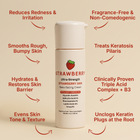 Keratosis Pilaris
Strawberry skin on arms & legs
Keratosis Pilaris
Strawberry skin on arms & legs
 Hyperpigmentation
Dark spots & uneven tone
Hyperpigmentation
Dark spots & uneven tone
 Eczema & Dryness
Dry, itchy, irritated patches
Eczema & Dryness
Dry, itchy, irritated patches