


If you've ever looked at your legs and noticed tiny dark dots scattered across the skin, you've probably wondered:
"Is this strawberry skin?"

It's one of the most common assumptions people make when they see dark spots on their legs.
After all, strawberry skin is widely associated with:
- dark dots
- visible pores
- rough texture
- uneven skin appearance
But here's the truth:
👉 Not all dark spots on legs are strawberry skin.
In fact, several skin conditions can create a similar appearance, including:
- keratosis pilaris
- ingrown hairs
- post-inflammatory hyperpigmentation
- folliculitis
- shaving irritation
- clogged hair follicles
Understanding the difference is important because the best treatment depends on the actual cause.
In this guide, we'll explain:
- What strawberry skin really looks like
- Other causes of dark spots on legs
- How to tell the difference
- Which treatments actually work
- When you should consider seeing a dermatologist
Key Takeaways
- Dark spots on legs are not always strawberry skin
- Strawberry skin is usually linked to clogged follicles and visible pores
- Keratosis pilaris often looks similar but has a different root cause
- Ingrown hairs and post-shave irritation can mimic strawberry skin
- The correct treatment depends on identifying the underlying cause
- Exfoliation, hydration, and barrier support are often key parts of treatment

Why Does Strawberry Skin Cause Dark Spots?
To understand this, it helps to look at what happens inside the follicle.
Hair Follicles Become More Visible
When follicles become clogged with:
-
- oil
- dead skin
- debris
they can appear darker.
After exposure to air, trapped material may oxidize, making follicles look like tiny black dots.
This is one reason why strawberry skin often becomes more noticeable after shaving.
Not Every Dark Spot Is Strawberry Skin
This is where confusion begins.
Many conditions create dark spots that look similar at first glance.
Let's look at the most common possibilities.
Cause #1: Keratosis Pilaris (KP)
One of the biggest sources of confusion is keratosis pilaris.
KP is often called:
-
- chicken skin
- rough bumps
- bumpy skin on arms
What Causes KP?
KP occurs when:
-
- keratin accumulates
- follicles become blocked
- small bumps form
Unlike strawberry skin, KP is primarily a keratinization issue.
How KP Looks
KP often appears as:
-
- tiny bumps
- rough texture
- pink, red, or brown dots
On darker skin tones, these bumps may appear as dark spots.
This causes many people to mistake KP for strawberry skin.
Common Areas
-
- upper arms
- thighs
- buttocks
- calves
Cause #2: Ingrown Hairs
Another major culprit is ingrown hairs.
What Happens?
After shaving or waxing:
-
- hair grows back incorrectly
- curls into the skin
- triggers inflammation
This can leave behind:
-
- dark spots
- redness
- bumps
Many people assume these are strawberry legs when they're actually ingrown hairs.
Signs of Ingrown Hairs
Look for:
-
- isolated bumps
- visible trapped hairs
- irritation around follicles
Cause #3: Post-Inflammatory Hyperpigmentation (PIH)
PIH is one of the most overlooked causes of dark spots.
What Is It?
PIH occurs when inflammation leaves behind excess pigmentation.
Common triggers include:
-
- ingrown hairs
- acne
- folliculitis
- shaving irritation
How It Looks
Unlike strawberry skin, PIH often appears as:
-
- flat dark spots
- brown marks
- patches of discoloration
The skin may be smooth but still appear spotted.
Cause #4: Folliculitis
Folliculitis is inflammation of hair follicles.
It may be caused by:
-
- bacteria
- yeast
- friction
- shaving
Symptoms
-
- red bumps
- tenderness
- itching
- dark marks after healing
Once inflammation settles, pigmentation can remain for weeks or months.
Cause #5: Visible Hair Follicles
Some people simply have naturally visible follicles.
This is particularly common if:
-
- hair is coarse
- skin is fair
- follicles are larger
In these cases:
-
- there may be no irritation
- no bumps
- no inflammation
Just visible follicle openings.
Cause #6: Dry Skin
Surprisingly, dry skin can make follicles appear more noticeable.
When skin becomes dehydrated:
-
- texture becomes rougher
- pores appear more prominent
- bumps become easier to see
This doesn't necessarily mean you have strawberry skin.

How to Tell if It's Actually Strawberry Skin
Ask yourself these questions:
Do You See Tiny Dark Dots?
If yes, strawberry skin is possible.
Are the Dots Located Around Hair Follicles?
If yes, clogged follicles may be involved.
Does It Become More Noticeable After Shaving?
This is a strong indicator of strawberry skin.
Is the Skin Rough or Bumpy?
If yes, you may also have keratosis pilaris.
Are the Marks Flat and Brown?
If yes, hyperpigmentation may be involved.
Strawberry Skin vs Keratosis Pilaris
One reason these conditions are confused is that they frequently occur together.
Strawberry Skin
Typically involves:
- dark dots
- visible follicles
- pore congestion
Keratosis Pilaris
Typically involves:
- rough bumps
- keratin buildup
- sandpaper-like texture
The Reality
Many people have both.
For example:
- KP creates bumps
- clogged follicles create dark dots
Together they create the appearance many people call strawberry skin.

Why Moisturizing Alone Doesn't Fix Dark Spots
Many people try:
- body lotion
- a keratosis pilaris moisturizer
- thick creams
While these improve hydration, they don't fully address:
- follicular buildup
- keratin plugs
- pore congestion
That's why skin may feel softer while still looking dotted.
What Actually Helps?
Treatment depends on the cause.
However, several approaches help most cases of strawberry skin.
Step 1: Gentle Exfoliation
Exfoliation helps remove:
-
- dead skin
- buildup
- follicular congestion
Salicylic Acid
Best for:
-
- clogged follicles
- dark dots
- strawberry legs
It penetrates pores and helps dissolve debris.
Lactic Acid
Best for:
-
- rough texture
- keratosis pilaris treatment
- chicken skin treatment
It exfoliates while also hydrating.
Glycolic Acid
Best for:
-
- uneven texture
- skin turnover
Step 2: Daily Hydration
A good:
-
- keratosis pilaris lotion
- keratosis pilaris cream
- moisturizer for KP
supports:
-
- barrier repair
- hydration
- smoother skin
Look for ingredients like:
-
- ceramides
- glycerin
- urea
Step 3: Improve Hair Removal Habits
Many cases of strawberry legs worsen because of shaving habits.
Avoid:
-
- dull razors
- dry shaving
- excessive pressure
Do:
-
- use shaving gel
- moisturize afterward
- replace razors regularly

A Smarter, Multi-Active Approach to Treating Strawberry Skin & KP
Because dark spots on the legs often involve multiple contributing factors, treating only one aspect of the problem rarely produces the best results.
Modern skincare routines increasingly focus on combining:
- exfoliation
- hydration
- barrier support
rather than relying on a single ingredient.
This is especially important when dark spots are linked to:
- strawberry skin
- keratosis pilaris
- visible follicles
- rough texture
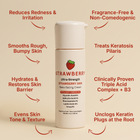
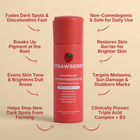
This is where TryStrawberry aligns with a more comprehensive treatment approach.
Its Advanced Triple-Acid Complex for Keratosis Pilaris combines multiple exfoliating acids designed to help:
- improve skin texture
- reduce follicular buildup
- support smoother-looking skin over time
Rather than relying solely on a moisturizer, this type of multi-acid approach reflects what many modern skincare routines now prioritize for effective:
- strawberry skin treatment
- kp treatment
- best treatment for keratosis pilaris
👉 Learn more: https://trystrawberry.com/products/strawberry-advanced-triple-acid-complex-qty
When Should You See a Dermatologist?
Consider professional evaluation if:
- spots are painful
- lesions are spreading
- itching is severe
- bumps contain pus
- home treatments aren't helping
A dermatologist can determine whether you're dealing with:
- strawberry skin
- folliculitis
- eczema
- hyperpigmentation
- another skin condition
Common Mistakes People Make
Assuming All Dark Spots Are Strawberry Skin
Different causes require different treatments.
Over-Scrubbing
Aggressive exfoliation can worsen irritation.
Ignoring Hydration
Healthy skin needs moisture and barrier support.
Expecting Immediate Results
Texture improvements take time.
FAQs
Are dark spots on legs always strawberry skin?
No. They may also be caused by keratosis pilaris, ingrown hairs, hyperpigmentation, folliculitis, or visible follicles.
How can I tell if I have strawberry skin?
Look for tiny dark dots centered around hair follicles, often becoming more noticeable after shaving.
Can keratosis pilaris look like strawberry skin?
Yes. KP often creates bumps and discoloration that resemble strawberry skin.
Do dark spots from shaving mean I have strawberry legs?
Not always. They may be caused by ingrown hairs or post-inflammatory hyperpigmentation.
What is the best treatment for strawberry skin?
Most effective routines combine:
-
- exfoliation
- hydration
- barrier support
Can strawberry skin go away permanently?
It can improve significantly, but maintenance is often needed to keep skin smooth.
Final Thoughts
Dark spots on your legs don't automatically mean you have strawberry skin.
While strawberry skin is one common cause, several other conditions can create a similar appearance, including:
- keratosis pilaris
- ingrown hairs
- folliculitis
- post-inflammatory hyperpigmentation
The key is understanding what's actually causing the spots.
Because once you identify the root issue, you can choose a routine that addresses it more effectively.
And in many cases, the path to smoother skin isn't about scrubbing harder—it's about combining exfoliation, hydration, and barrier support in a way that works with your skin, not against it.