

If you’ve been dealing with strawberry skin, you already know how frustrating it can be.
You moisturize regularly.
You exfoliate occasionally.
You try different scrubs, lotions, and viral skincare hacks.
Yet the:
- dark dots
- rough texture
- visible pores
- and bumps
keep coming back.
The reason?
👉 Most people are treating strawberry skin incorrectly.
Because strawberry skin is not just a dryness issue — it’s usually a combination of:
- clogged follicles
- keratin buildup
- dead skin accumulation
- irritation
- and skin barrier imbalance
That means getting smoother skin requires more than a single product.
It requires the right routine.
In this guide, we’ll break down:
- What actually causes strawberry skin
- The best step-by-step routine for smoother skin
- What ingredients help most
- Common mistakes to avoid
- And how to build a routine that actually works long-term
Key Takeaways
- Strawberry skin usually involves clogged follicles and keratin buildup
- Most people also have some degree of keratosis pilaris (KP)
- Moisturizing alone is not enough
-
The best routines combine:
- exfoliation
- hydration
- barrier repair
- Consistency matters more than intensity
- Over-exfoliating often makes strawberry skin worse
What Is Strawberry Skin?
Strawberry skin refers to skin that appears:
- dotted
- rough
- uneven
- bumpy
It commonly affects:
- legs (strawberry legs)
- arms
- thighs
- buttocks
The tiny dark dots resemble the surface of a strawberry, which is where the name comes from.
What Causes Strawberry Skin?
Strawberry skin is usually caused by:
- clogged hair follicles
- dead skin buildup
- oxidized oil inside pores
- shaving irritation
- ingrown hairs
- keratin accumulation
Many people also have:
👉 Keratosis Pilaris
A condition caused by keratin blocking follicles, leading to:
- chicken skin on arms
- chicken skin on legs
- bumpy skin on arms
This is why the best keratosis pilaris treatment routines often overlap with strawberry skin treatment.
Why Most Strawberry Skin Routines Fail
Most people focus on:
-
ONLY moisturizing
or - ONLY exfoliating
But healthy skin requires balance.
Too Much Moisture Without Exfoliation
Leads to:
- softer skin
- but continued buildup
Too Much Exfoliation
Leads to:
- irritation
- redness
- barrier damage
The goal is:
✅ controlled exfoliation + hydration + barrier support
The Best Routine to Get Rid of Strawberry Skin
Here’s the step-by-step routine dermatology-inspired routines typically prioritize for smoother skin texture.
Step 1: Use a Gentle Cleanser
The routine starts in the shower.
What to Avoid
❌ harsh soaps
❌ heavily fragranced cleansers
❌ stripping body washes
These can damage the skin barrier and worsen irritation.
What to Look For
✔ gentle cleansers
✔ hydrating formulas
✔ fragrance-free options if sensitive
This helps prepare the skin without over-drying it.
Step 2: Exfoliate the Right Way
This is the most important step.
Because strawberry skin usually involves:
- clogged follicles
- keratin buildup
- rough texture
👉 Exfoliation is necessary.
But not all exfoliation is equal.
Why Chemical Exfoliation Works Better
Many people immediately use:
- sugar scrubs
- coffee scrubs
- rough exfoliating gloves
Unfortunately, aggressive scrubbing often worsens:
- irritation
- redness
- inflammation
Modern skincare routines usually favor:
👉 Chemical Exfoliation
because it works more evenly and effectively.
Best Ingredients for Strawberry Skin
Salicylic Acid (BHA)
Best for:
- clogged follicles
- dark dots
- strawberry legs treatment
How It Works
Salicylic acid penetrates inside pores and dissolves buildup.
This helps:
- reduce visible dots
- unclog follicles
- smooth texture
Lactic Acid (AHA)
Best for:
- rough texture
- keratosis pilaris treatment
- chicken skin treatment
How It Works
Lactic acid exfoliates while also hydrating the skin.
It’s commonly found in:
- keratosis pilaris lotion
- keratosis pilaris cream
- best lotion for keratosis pilaris
Glycolic Acid
Best for:
- uneven texture
- stubborn roughness
It helps improve:
- skin turnover
- overall smoothness
How Often Should You Exfoliate?
This is where people make major mistakes.
Recommended Frequency
Start with:
- 2–3 times weekly
NOT:
❌ multiple times daily
❌ harsh daily exfoliation
Too much exfoliation damages the barrier.
Step 3: Moisturize Immediately After
This step is essential.
After exfoliation, your skin needs:
- hydration
- barrier support
- moisture retention
A good:
- keratosis pilaris moisturizer
- keratosis pilaris moisturiser
- moisturizer for KP
helps:
- soften texture
- reduce dryness
- improve comfort
What Ingredients Help in Moisturizers?
Look for:
- ceramides
- glycerin
- urea
- barrier-supporting ingredients
These help reduce irritation while supporting smoother skin.
Step 4: Improve Your Shaving Routine
Shaving often worsens:
- strawberry legs
- follicular irritation
- visible pores
Common Mistakes
❌ dry shaving
❌ dull razors
❌ shaving without lubrication
Better Shaving Practices
Use a Sharp Razor
Old razors increase irritation.
Use Shaving Cream or Gel
Reduces friction.
Moisturize Immediately After
Helps calm the skin.
Step 5: Protect the Skin Barrier
This is one of the most overlooked steps.
When the skin barrier becomes damaged:
- redness increases
- texture worsens
- irritation becomes more visible
This often happens from:
- over-exfoliation
- harsh scrubs
- drying products
The goal is not:
❌ maximum exfoliation
The goal is:
✅ balanced skin support

A Smarter, Multi-Active Approach to Treating Strawberry Skin & KP
Modern skincare routines are moving away from:
- single-ingredient solutions
- harsh scrubs
- overly aggressive exfoliation
Instead, more effective routines combine:
- exfoliation
- hydration
- barrier support
This is especially important for:
- strawberry skin
- keratosis pilaris
- chicken skin on arms and legs
because these concerns are caused by multiple overlapping factors.
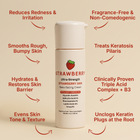
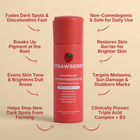
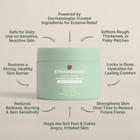
This is where TryStrawberry aligns with a more advanced skincare approach.
Its Advanced Triple-Acid Complex for Keratosis Pilaris is formulated to combine multiple exfoliating acids into one system designed to:
- improve rough texture
- support smoother-looking skin
- help reduce follicular buildup over time
Rather than depending solely on hydration or harsh physical scrubs, this type of multi-acid approach reflects what many modern skincare routines now prioritize for effective:
- kp treatment
- strawberry legs treatment
- best treatment for keratosis pilaris
👉 Explore more: https://trystrawberry.com/products/strawberry-advanced-triple-acid-complex-qty

What a Weekly Strawberry Skin Routine Looks Like
Monday
-
- Gentle cleanse
- Exfoliating acid
- Moisturizer
Tuesday
-
- Gentle cleanse
- Moisturizer only
Wednesday
-
- Gentle cleanse
- Exfoliating acid
- Moisturizer
Thursday
-
- Barrier repair + hydration focus
Friday
-
- Gentle exfoliation
- Moisturizer
Weekend
-
- Focus on hydration and skin recovery
How Long Does It Take to See Results?
This is important:
👉 Strawberry skin does NOT disappear overnight.
Weeks 1–2
-
- softer skin
- reduced dryness
Weeks 4–8
-
- smoother texture
- fewer bumps
- less visible dots
Weeks 8–12
-
- major visible improvement
Consistency matters far more than intensity.
Common Mistakes That Make Strawberry Skin Worse
1. Over-Exfoliating
Too much exfoliation damages the barrier.
2. Using Harsh Scrubs
Aggressive scrubbing worsens irritation.
3. Skipping Moisturizer
Hydration is still essential.
4. Expecting Instant Results
Skin turnover takes time.
5. Using Too Many Products at Once
This often increases irritation and sensitivity.
FAQs
What is the best routine for strawberry skin?
The most effective routine combines:
- gentle cleansing
- controlled exfoliation
- hydration
- barrier support
What is the best treatment for keratosis pilaris?
The best approach includes:
- exfoliating acids
- moisturization
- consistency
How often should I exfoliate strawberry skin?
Usually:
- 2–4 times weekly
depending on skin sensitivity.
Can moisturizer alone fix strawberry skin?
No. Moisturizer helps dryness but does not remove follicular buildup.
What causes chicken skin on arms?
It’s usually caused by keratin buildup inside follicles (keratosis pilaris).
How long does it take to improve strawberry skin?
Most people notice visible improvement within:
- 4–8 weeks
with consistent care.
Final Thoughts
Getting rid of strawberry skin isn’t about finding one miracle product.
It’s about:
- consistency
- balanced exfoliation
- hydration
- and supporting the skin barrier properly
Because smoother skin comes from treating the cause —
not just temporarily softening the surface.
The goal isn’t aggressive treatment.
👉 It’s a smarter routine that works with your skin over time.