

Bikini line bumps, dark marks, ingrown hairs, and rough skin are common concerns, especially if you regularly shave, wax, or remove hair from the area. If you're wondering how to get smooth bikini line skin, the answer usually isn't scrubbing harder or shaving more closely. A better approach is to reduce irritation, prevent ingrown hairs, gently exfoliate when appropriate, and support the skin barrier.
Those small red or brown bumps may come from ingrown hairs, razor bumps, folliculitis, irritation, or post-inflammatory hyperpigmentation. Repeated inflammation can leave behind dark marks even after the original bump has disappeared.
If your goal is smooth bikini line skin without bumps or dark marks, your routine needs to address both problems: the bumps themselves and the pigmentation they can leave behind.

Quick Answer
To get smoother bikini line skin, focus on gentle hair removal, controlled exfoliation, moisturization, and reducing friction and irritation.
Avoid repeatedly shaving over the same area, picking ingrown hairs, aggressively scrubbing the skin, or applying harsh products immediately after hair removal. Shaving, waxing, and plucking can irritate hair follicles and contribute to ingrown hairs or folliculitis.
For dark marks, the priority is preventing new inflammation. Post-inflammatory hyperpigmentation develops after skin injury or inflammation and can remain visible after the original irritation has healed.
A simple routine can therefore look like:
Gentle cleansing → careful hair removal → appropriate exfoliation → moisturization → consistent prevention
Why Does the Bikini Line Get Bumps?
The bikini area contains hair follicles and is exposed to several potential sources of irritation.
Common triggers include:
- Shaving
- Waxing
- Plucking
- Tight clothing
- Friction
- Sweat and humidity
- Repeated hair removal
- Picking or squeezing bumps
- Close shaving
- Ingrown hairs
The American Academy of Dermatology notes that shaving, plucking, waxing, tight clothing, and friction can contribute to folliculitis by damaging hair follicles.
Ingrown Hairs
An ingrown hair occurs when a hair grows back into the skin rather than growing normally through the surface.
This can create a small:
- Red bump
- Dark bump
- Tender spot
- Itchy area
- Pimple-like lesion
Ingrown hairs can trigger inflammation, and that inflammation may eventually leave a dark mark.
DermNet notes that shaving can cause hairs to re-enter the skin and trigger an inflammatory reaction. This can occur in shaved areas, including the pubic region and may subsequently result in post-inflammatory hyperpigmentation.
Why Do Dark Marks Appear After Bikini Line Bumps?
You may notice that a bump disappears but leaves a brown or dark spot behind.
This is often post-inflammatory hyperpigmentation (PIH).
PIH occurs when inflammation or injury stimulates increased melanin production or causes pigment to become deposited deeper in the skin. The resulting marks can range from light brown to dark brown or black.
This creates a frustrating cycle:
Hair removal → irritation → bump → inflammation → dark mark → another hair-removal session → more irritation
Breaking that cycle is often more important than simply trying to lighten the existing pigmentation.
Step 1: Change the Way You Remove Bikini Hair
If shaving is causing constant bumps, changing your technique can make a significant difference.
You don't necessarily have to stop hair removal altogether. The goal is to reduce unnecessary trauma to the skin.
Use a Clean, Sharp Razor
A dull blade can require repeated passes over the same area.
More passes mean more friction and irritation.
Use a clean, sharp razor and avoid repeatedly going over the same patch of skin.
Shave in the Direction of Hair Growth
For people prone to ingrown hairs, shaving against the direction of hair growth can create a particularly close shave that may increase the likelihood of hairs growing back into the skin.
DermNet recommends shaving in the direction of the follicle, avoiding stretching the skin, using short strokes, and avoiding shaving the same area repeatedly.
Don't Stretch the Skin While Shaving
Stretching the skin can allow the razor to cut the hair extremely close to the surface.
When the skin returns to its normal position, the shortened hair may have a greater opportunity to become trapped or grow into the surrounding skin.
Don't Dry-Shave
Use a suitable shaving product and give it enough time to soften the hair.
Dry shaving can increase friction and irritation.
Don't Chase an Extremely Close Shave
A perfectly hairless appearance isn't worth repeatedly irritating the skin.
If you consistently experience ingrown hairs after very close shaving, leaving slightly more hair may be a better trade-off for your skin.
Step 2: Don't Scrub Bikini Line Bumps Away
One of the most common mistakes is using a rough scrub to remove bumps.
It may feel satisfying temporarily, but aggressive physical exfoliation can irritate already-inflamed skin.
If the problem is an ingrown hair or irritated follicle, more friction isn't necessarily the answer.
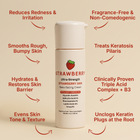
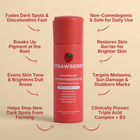
Instead, consider gentle chemical exfoliation when the skin is calm, and the product is appropriate for the external bikini-line skin.
The objective is to help loosen accumulated dead skin cells without creating additional irritation.
Step 3: Consider Chemical Exfoliation
Ingredients such as salicylic acid, lactic acid, and glycolic acid are commonly used in skincare to improve rough texture and exfoliate the skin.
For bikini-line concerns, however, more is not better.
The skin around the external bikini line can be sensitive, so a strong acid or excessive frequency may irritate.
If you use an exfoliating product:
- Follow its directions.
- Start slowly.
- Apply only to the intended external skin.
- Don't apply it to mucosal tissue.
- Avoid using it on broken or freshly irritated skin.
- Stop if you experience significant burning or irritation.
Salicylic Acid
Salicylic acid is a beta hydroxy acid (BHA) commonly used to exfoliate and unclog pores.
Because ingrown hairs involve the hair follicle, salicylic acid can be useful in some skincare routines designed for follicular bumps.
However, it isn't appropriate for every person or every cause of bikini-line bumps.
Lactic Acid
Lactic acid is an alpha hydroxy acid (AHA) that exfoliates the skin while also having humectant properties.
It may be useful when roughness and uneven texture are part of the problem.
Glycolic Acid
Glycolic acid is another AHA that helps exfoliate the skin's surface.
It can be useful for improving uneven texture, but stronger concentrations can also be irritating, especially on sensitive areas.
For the bikini line, gentle and consistent is generally more sensible than aggressive exfoliation.
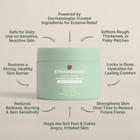
Step 4: Moisturize the Area
Exfoliation shouldn't be the only part of your routine.
Hair removal and exfoliating products can leave skin feeling dry or irritated, so moisturization matters.
Look for a simple moisturizer that supports the skin barrier without causing additional irritation.
Moisturizing can also make the skin feel smoother and more comfortable between hair-removal sessions.
The goal isn't to make the area greasy.
It's to maintain comfortable, hydrated skin that is less likely to become irritated by routine grooming.
Step 5: Reduce Friction
Your bikini line doesn't just experience irritation from hair removal.
Clothing can contribute too.
Tight underwear, tight workout clothing, and constant rubbing can increase mechanical friction around the hair follicles.
DermNet identifies friction and tight clothing among factors associated with folliculitis.
Try to:
- Wear breathable underwear.
- Avoid extremely tight clothing for long periods.
- Change out of sweaty workout clothes.
- Avoid repeatedly rubbing or scratching the area.
- Give freshly shaved skin time to recover.
Reducing friction can be particularly important if bumps appear even when you aren't shaving.
Step 6: Stop Picking Ingrown Hairs
This is one of the hardest habits to break.
You see a bump.
You squeeze it.
You dig for the hair.
The bump becomes more inflamed.
Then you are left with a darker mark.
Picking and manipulating irritated follicles can increase skin injury and prolong inflammation. Since inflammation can lead to post-inflammatory hyperpigmentation, leaving bumps alone is an important part of preventing new dark marks.
If an ingrown hair is persistent, painful, or repeatedly returning in the same location, professional assessment may be more appropriate than trying to remove it yourself.
Step 7: Don't Apply Strong Actives Immediately After Hair Removal
Freshly shaved or waxed skin has already experienced mechanical stress.
Adding strong acids, retinoids, fragrances, or other potentially irritating products immediately afterward can increase discomfort and inflammation.
Instead:
Hair removal day = keep the routine simple.
Focus on:
- Gentle cleansing
- Minimal friction
- Comfortable moisturization
- Avoiding unnecessary active ingredients
Then resume your normal exfoliation routine once the skin has settled, according to your product's directions.
How to Prevent Dark Bikini Line Marks
If your main concern is pigmentation, preventing new inflammation should be your first priority.
Think of it as:
Prevent → Calm → Treat
Prevent New Bumps
Improve your shaving technique and reduce unnecessary friction.
Calm Existing Irritation
Don't continue exfoliating or shaving over visibly inflamed skin.
Address Remaining Pigmentation
Once the underlying irritation has settled, appropriate pigmentation-focused skincare may gradually improve the appearance of post-inflammatory marks.
DermNet notes that PIH can be treated with several topical approaches, although results vary and treatment needs to be selected according to the type and depth of pigmentation.
What Not to Use on Dark Bikini Marks
Avoid the temptation to use aggressive "bleaching" hacks or household ingredients.
Don't rely on:
- Lemon juice
- Baking soda
- Undiluted vinegar
- Harsh scrubs
- Strong acids used excessively
- Unregulated skin-lightening products
Irritating the skin in an attempt to lighten pigmentation can create more inflammation—and potentially more pigmentation.
This is especially relevant for skin that already develops dark marks after irritation.
Can Exfoliating Products Help With Bikini Line Bumps?
They can help with some forms of follicular congestion and rough texture, but the cause of the bumps matters.
If the bumps are caused by ingrown hairs or irritation from hair removal, gentle exfoliation may be useful as part of prevention.
If the bumps are infected folliculitis, a skincare exfoliant isn't necessarily the appropriate treatment.
Folliculitis can look similar to acne and may involve red, itchy, painful, or pus-filled lesions. The AAD recommends dermatological evaluation when folliculitis is persistent or when medication may be required.
So don't assume every bikini-line bump is simply an ingrown hair.
Bikini Line Bumps vs. Ingrown Hairs vs. Folliculitis
Knowing the difference can help you choose the right approach.
|
Concern |
What it may look like |
Common trigger |
|
Ingrown hair |
Small red, brown, or flesh-colored bump |
Hair growing back into skin |
|
Razor irritation |
Redness, burning, small bumps |
Shaving |
|
Folliculitis |
Acne-like red or pus-filled bumps around follicles |
Follicle irritation or infection |
|
Post-inflammatory hyperpigmentation |
Flat brown or dark mark |
Previous inflammation or injury |
|
Cyst |
Deeper, larger lump |
Blocked follicle or other causes |
These conditions can overlap, so appearance alone isn't always enough to determine the cause.
What If Your Bikini Line Is Naturally Darker?
Not every darker bikini line is a "dark mark."
Natural variation in skin pigmentation is normal.
The skin around the groin and inner thighs can also appear darker than surrounding areas for many reasons.
The goal should not necessarily be to make the bikini line the same shade as the surrounding skin.
Instead, focus on whether there has been a new change in pigmentation, particularly after shaving, bumps, irritation, or inflammation.
If the pigmentation is new, rapidly changing, thickened, itchy, painful, or associated with other symptoms, consider getting it evaluated.
A Simple Bikini Line Routine
You don't need a complicated 10-step routine.
On normal days
Cleanse → moisturize
Keep the routine gentle.
Before shaving
Warm water → shaving product → clean razor
Avoid dry shaving and unnecessary repeated passes.
After shaving
Rinse → gently pat dry → moisturize
Skip strong exfoliating products if the skin feels irritated.
Between shaving sessions
If your skin tolerates it, use an appropriate exfoliating product according to its directions.
The goal is prevention—not aggressive removal of every bump.
How Long Does It Take to Get Smoother Bikini Line Skin?
There isn't one guaranteed timeline.
A new shaving bump may settle relatively quickly, while post-inflammatory dark marks can take much longer to fade.
PIH can persist after the original inflammation has disappeared, and pigmentation can be more pronounced and longer-lasting in darker skin types.
This is why consistency matters.
Don't switch between multiple aggressive products every few days because you don't see immediate results.
Instead:
Reduce irritation → prevent new bumps → maintain a gentle routine → give pigmentation time to fade.
What About Laser Hair Removal?
For people who repeatedly experience ingrown hairs because of hair removal, laser hair reduction may be worth discussing with a qualified professional.
DermNet lists alternative hair-removal approaches, including laser therapy, among options that may help reduce recurrent pseudofolliculitis.
Laser treatment isn't necessary for everyone, and suitability depends on factors such as skin type, hair characteristics, the device used, and practitioner expertise.
If pigmentation is a major concern, choosing an experienced provider is particularly important because skin injury can sometimes worsen pigmentation.
When Should You See a Dermatologist?
Not every bikini-line bump requires medical treatment.
However, consider professional evaluation if you have:
- Recurrent painful bumps
- Pus-filled lesions
- Spreading redness
- Large or deep lumps
- Significant swelling
- Repeated infections
- Scarring
- Persistent itching
- Darkening that keeps getting worse
- Bumps that don't improve despite changing your hair-removal routine
Folliculitis can require specific treatment depending on its cause, and some conditions can resemble ordinary ingrown hairs.
Key Takeaways
If you're trying to get smooth bikini line skin without bumps or dark marks, focus on controlling the causes rather than aggressively treating the appearance.
Remember:
- Shaving can contribute to ingrown hairs and folliculitis.
- Shave in the direction of hair growth and avoid repeated passes.
- Don't pick or squeeze ingrown hairs.
- Reduce friction from tight clothing.
- Use gentle exfoliation rather than aggressive scrubbing.
- Moisturize regularly.
- Don't apply strong actives to freshly irritated skin.
- Dark marks can be post-inflammatory hyperpigmentation.
- Preventing new inflammation is essential for preventing new dark marks.
- A dermatologist should evaluate persistent, painful, or pus-filled bumps.
Final Thoughts
A smooth bikini line isn't about getting the closest possible shave or using the strongest exfoliant you can find.
It's about less irritation, better hair-removal technique, controlled exfoliation, hydration, and consistency.
If shaving repeatedly leaves you with bumps, try changing your technique before adding more products. If bumps leave dark marks, focus on preventing the inflammation that creates them in the first place.
And remember: the bikini area is sensitive skin. Don't apply products intended for the external bikini line to internal genital or mucosal areas unless the product or a healthcare professional specifically indicates it.
Try a gentle exfoliating approach for smoother-looking skin.