

The truth about food, sensitivities, and your skin's bumps 🍞🥛
If you've ever Googled keratosis pilaris (KP) late at night, you've probably seen someone swear that "cutting out gluten cleared my bumps" or "quitting dairy made my arms smooth again."
But here's the truth: Gluten and dairy don't cause KP. KP is genetic, tied to keratin buildup in your hair follicles. Still, food can sometimes influence how your skin behaves, which is why the gluten + dairy conversation keeps popping up.
If you want the full big-picture overview of what KP really is, start with Keratosis Pilaris Explained.
🌾 Gluten & KP

The Science Says
- No direct evidence that gluten triggers KP in general population
- KP is not a gluten-related condition
- Exception: Celiac disease or gluten sensitivity patients may see improvement
Why It Matters
- Chronic inflammation affects skin
- Nutrient absorption issues worsen keratin buildup
- Overall skin health improves when gluten removed
The Takeaway
Unless you have a diagnosed gluten condition or notice your own KP flares when you eat gluten, it's not necessary to cut it out. Gluten itself isn't a proven KP driver.
For a broader perspective on food's role, see Does Diet Affect KP?
🥛 Dairy & KP

📊 What Research Shows
- Research ties dairy more strongly to acne than to KP
- No large studies prove dairy worsens KP directly
- Individual responses vary significantly
What People Report
The Takeaway
It's not universal. But if you see a pattern — like your KP flares when you drink more milk or load up on cheese — a short trial elimination may give you answers.
🔎 Practical Testing Guide
If you're curious about the gluten/dairy connection, here's a smart way to test it without going overboard:
Track what you eat and how your KP looks/feels over 2–4 weeks.
Eliminate gluten or dairy, not both at once. Otherwise it's impossible to know the culprit.
• If cutting dairy: get calcium + vitamin D from fortified plant milks, greens, or supplements
• If cutting gluten: swap with quinoa, brown rice, or buckwheat
After a break, add the food back in and see if bumps react.

✨ What Matters More Than Food
At the end of the day, KP is:
Runs in families
Follicle plugs
Dryness matters
Even if diet influences your bumps, the most consistent improvements still come from topical care:
🧴 The Proven Approach
- Gentle exfoliants → urea, lactic acid, salicylic acid
- Barrier moisturizers → ceramides, glycerin, shea butter
- SPF → prevents redness and darkening
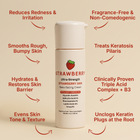
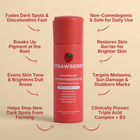
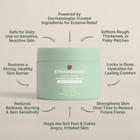
✨ Strawberry tip: Our products combine exfoliating acids + nourishing emollients to support smoother, softer skin.

Bottom Line 🌟
- Gluten and dairy don't cause KP
- In people with sensitivities (like celiac or lactose intolerance), they may make it look or feel worse
- If you suspect a link, test it carefully with a food journal and one elimination at a time
- Don't cut foods without replacing nutrients — your skin (and whole body) need them
- The core issue in KP remains genetics, keratin buildup, and skin dryness
If you want to explore more about KP's overall relationship with nutrition, head to Does Diet Affect KP? What Research Really Says.
Dermatologist-tested • Fragrance-free • 30-day guarantee
This article is for information only and isn't medical advice. Always consult a qualified healthcare provider before making dietary changes or starting supplements.