Elise Warren
Monday, September 7th, 2026 By Elise Warren Skin Specialist

Why everything women try for hyperpigmentation fails and what finally gets rid of it

Five treatments. Five different reasons none of them cleared the dark patches.

Five failed hyperpigmentation treatments crossed out: a vitamin C serum, a fade cream, an acid peeling solution, a retinoid gel and a niacinamide serum

Every one of these is still in a bathroom cabinet.

Women have spent hundreds on Amazon's best-selling vitamin C and the $182 luxury one. On drugstore fade creams. On 30% acid peels, on retinoid gels, on kojic soap, maybe on a course of IPL. The patches lighten, and then they come back.

It was never their fault. Every one of those treats pigment that already exists. None of them switched off the cell making it. Here is why each one failed, and what finally holds.

Everything women try removes pigment already made
None of it reached the enzyme that produces melanin
And some of it made the patches worse
1. Vitamin C serums

It brightens everything and fades nothing

A vitamin C serum, crossed out

The best-selling vitamin C serum on Amazon. The $182 luxury C serum aestheticians push. The 23% budget suspension women grab when the first two do not work.

All three are antioxidants. Their real job is neutralising free radicals, and they give skin a general glow within a couple of weeks. That glow is what makes it feel like it is working.

It does inhibit tyrosinase, the enzyme that makes melanin, but only weakly, and only while it is stable.

L-ascorbic acid oxidises on contact with air and light. If your serum has turned orange, it has already degraded. Most of the bottle is spent before you finish it.

So the whole face lifts a shade while the patch stays exactly as dark relative to everything around it. It brightens the background, not the spot.

2. Hydroquinone fade creams

It pauses the pigment and never removes it

A hydroquinone fade cream, crossed out

The big drugstore fade creams are all 2% hydroquinone. Prescription 4% and triple-combo creams are the stronger versions dermatologists write up.

Unlike most of this list, hydroquinone genuinely works. It is the reason women see real fading, and the reason they keep going back to it.

But it is not designed to be used continuously. Dermatologists cycle it in courses of three to four months because prolonged use carries a risk of ochronosis, a blue-grey staining that is far harder to treat than the original patch. It is restricted across the EU for the same reason.

And the moment it stops, the pigment returns. Often darker. Hydroquinone suppresses melanin production without ever reducing the cell's capacity to produce it, so the moment the pressure comes off, it resumes.

Nobody failed at using it. It has a built-in end date, and nothing was ever going to hold the result after it.

3. Acid peels

The one thing that can leave skin worse than before

An acid peeling solution, crossed out

The cult 30% AHA + 2% BHA peeling solution is the one in almost every bathroom. IPL, laser resurfacing and a glycolic peel series are the ones women pay a clinic for.

All of them work by removing or breaking up pigment already in the skin. On sun spots and freckles, that often holds.

On melasma it frequently does not, and this is the part almost nobody is told: melasma is triggered by heat and inflammation as well as by UV.

IPL and aggressive peels deliver both. So the patch lifts for a few weeks and then rebounds, sometimes darker and wider than the original. There is a documented pattern of this.

The risk is higher on deeper skin tones, because more melanin means more pigment available to respond to the injury. Women who paid for treatments and came out worse did nothing wrong. That was the mechanism.

4. Retinoids

It clears the pigment already there and none of the pigment coming

A retinoid gel, crossed out

Over-the-counter adapalene gel has been on shelves since 2016, which makes it the retinoid most women start with. Tretinoin 0.025% is what a doctor writes up. A ‘gentle’ granactive retinoid serum is what women switch to when the first two sting.

All of them accelerate cell turnover, so pigmented cells reach the surface and shed faster than they otherwise would.

That helps at the margins. But turnover is the exit route, not the source. Retinoids do nothing to the enzyme still manufacturing melanin underneath, so the cell keeps sending more up.

And they irritate. Redness, peeling and stinging are the normal response, particularly in the first six weeks.

Irritation is inflammation, and inflammation is itself a cause of pigmentation. On medium and deep skin tones a retinoid can generate the exact post-inflammatory marks it was meant to remove.

5. Single-ingredient brighteners

One ingredient cannot fix a problem with five causes

A niacinamide serum, crossed out

The viral 10% niacinamide + zinc serum is one of the highest-volume serums in the world. A 2% alpha arbutin serum sits next to it on the same shelf. Kojic soap and a 10% azelaic acid booster are the two every Reddit thread pushes.

Every one of these is a real active with real evidence behind it. That is what makes this the most frustrating tier.

Each treats exactly one step. Niacinamide slows pigment being handed to surface cells. Arbutin blocks the enzyme partially. Azelaic acid does a little of both.

Pigmentation runs five pathways at once: production, deposited pigment, a hormonal trigger, inflammation, and UV. Fix one and the other four keep running.

Kojic soap has a second problem on top. It is a wash-off. Thirty seconds of contact and it goes down the drain, which is nowhere near long enough to affect anything.

What actually works

The three depths pigmentation has to be treated at

Every product above failed for one of two reasons. It treated pigment that already existed, or it worked one pathway while four others carried on.

Melanin is made deep, travels up, and lands on the surface. A treatment has to meet it at all three points, or it is clearing the top while the bottom refills.
Kojic acid · at the source

Inhibits tyrosinase, the enzyme inside the melanocyte that manufactures melanin. Less pigment gets made in the first place.
Alpha-arbutin · mid-layer

Blocks pigment on its way up, before it is deposited into the cells you can actually see.
Glycolic acid · surface

Clears the pigment already deposited, so the patch you can see today fades while the two layers below it are being shut down.

The first one is the difference. Kojic acid is the only one of the three that reaches the cell where melanin is actually made.

Use all three together, daily, and the patch fades instead of returning.

The one formula that does it

Do THIS to get rid of dark patches at the source, and finally feel confident bare-faced again
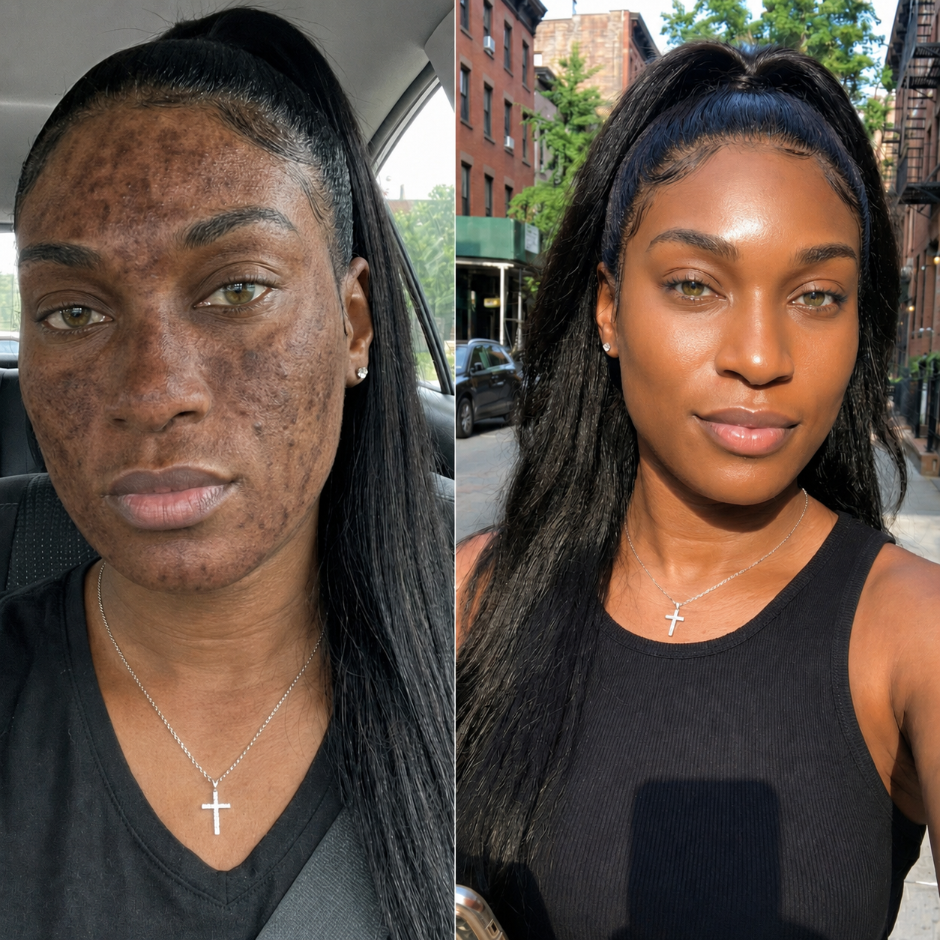
A face with melasma across the forehead and cheeks beside the same face clear and even
★★★★★Rated 4.9Over 200k Users

Only one treatment puts all three depths in a single leave-on formula at clinical strength: Strawberry's Triple-Acid Complex for Hyperpigmentation.

Kojic acid at the melanocyte. Alpha-arbutin through the mid-layer. Glycolic acid clearing the surface.

And it adds the two nothing else does. Tranexamic acid for the hormonal trigger, niacinamide for the inflammation. All five, one step.

A single-active brightener treats one cause; the Strawberry Triple-Acid Complex treats all five Try the treatment - 50% off

60-day guarantee. Keep the bottle, no return needed.

Why it works 01

Kojic acid stops the skin making the dark pigment

The hero active
Kojic Acid 2%

Inhibits tyrosinase, the enzyme that produces melanin, so less pigment is made in the first place.

This is the part every product on the list above skips.

A dark patch is not a stain on the surface. It is melanin that a cell called a melanocyte has already manufactured and pushed upward. By the time you can see it, the work is finished.

Kojic acid inhibits tyrosinase, the enzyme inside that cell that makes melanin in the first place. Block the enzyme and you reduce what the cell can produce.

A vitamin C serum brightens what has already surfaced. It does not touch the enzyme. That is why the patch fades and then comes straight back.

Why it works 02

It also fades the dark patches already there

At the source
Kojic Acid 2%

Stops melanin being made

Mid-layer
Alpha-Arbutin 2%

Blocks pigment on its way up

Surface
Glycolic Acid 5%

Clears the pigment already there

A single-active brightener has to pick a depth.

The Triple-Acid Complex for Hyperpigmentation is the only treatment that works on all three together. Kojic acid at the melanocyte. Alpha-arbutin through the mid-layer. Glycolic acid clearing the surface.

Choose one and you treat a third of the problem. That is why a 20% vitamin C serum can feel powerful and still leave the patch there.

One active
Treats
one layer
Triple-Acid Complex
Treats
all three
Why it works 03

It treats the hormone problem that keeps bringing the patches back
The cause almost nothing treats
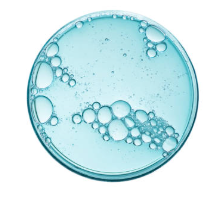
Tranexamic Acid 2%

Interrupts the hormonal signal that keeps telling the skin to make more pigment.

This is the one that changes outcomes, and the reason nothing on the earlier list held.

Melasma, the patches after pregnancy, and the discoloration on the neck and underarms that comes with PCOS all share a driver. A hormonal signal keeps telling the melanocyte to produce.

You can fade the surface as often as you like. While that signal is firing, the pigment is being replaced underneath.

Tranexamic acid interrupts that signal. It is why this formula holds where brighteners alone do not, and why it works for women with PCOS rather than in spite of it.

Why it works 04

It stops new dark spots forming while the old ones fade
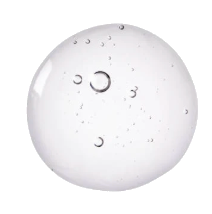
Niacinamide 5%
Calms the inflammation that darkens marks
Slows pigment transfer to the surface

Fading is only half of clear.

Every spot, every shave bump, every patch of friction leaves inflammation behind, and inflammation is what turns a small mark into a dark one.

So while old patches fade, new ones are being laid down. The tone never fully evens out.

Niacinamide at 5% calms that inflammation and slows pigment transfer to the surface, so existing marks fade faster than new ones can appear.

Why it works 05

Independently tested and verified by Eurofins

Everything above is a hypothesis until real skin proves it.

Here is what women with PCOS-related hyperpigmentation keep reporting:

✓

Dark patches fadedIn 2 weeks

✓

Brighter, even toneBy week 4

✓

Faded underarm and thigh spotsWhere it shows most

✓

Results held with daily SPFNo rebound

From customer reports.

Then there is the part almost nobody checks. In a category where "brightening" is unregulated, most skincare self-certifies its own formula.

This one does not. Every batch is independently tested by Eurofins, one of the largest testing laboratories in the world, and the certificate is published.

Eurofins Certificate of Analysis for the Strawberry Triple-Acid Complex for Hyperpigmentation

Published for every batch.

What to expect

Here is what happens once women start

The Strawberry Ultra-Strength Hyperpigmentation Brightening Cream

Pigment fades on a schedule, not overnight. What this does is improve on a predictable one.

First 5 uses
Skin looks brighter and clearer, before any patch has moved.
Week 2
Dark patches visibly lighten at the edges first.
Week 4
Tone evens out across the whole area, not just the patch.
Week 8
Older marks and post-inflammatory pigment fade. These are always the slowest.
Ongoing
Because the hormonal trigger does not go away, results hold as long as you keep going. Stop, and the pigment returns.
Real results

Not just a few results. Over 100,000 women.

Photographs sent in by customers. No retouching, same lighting, same distance.

BeforeAfterImani's forehead and cheeks before and after

“Melasma across my whole forehead and cheeks since my second pregnancy. I stopped letting people take pictures of me. Two weeks in, my husband asked if I had had something done.”

★★★★★ Imani D., 33

Melasma · Visible in 2 weeks

BeforeAfterJazmine's face before and after

“Hydroquinone, three peels, and a dermatologist who told me to just accept it. This did more in three weeks than all of that did in four years.”

★★★★★ Jazmine R., 29

Former hydroquinone user · Visible in 3 weeks
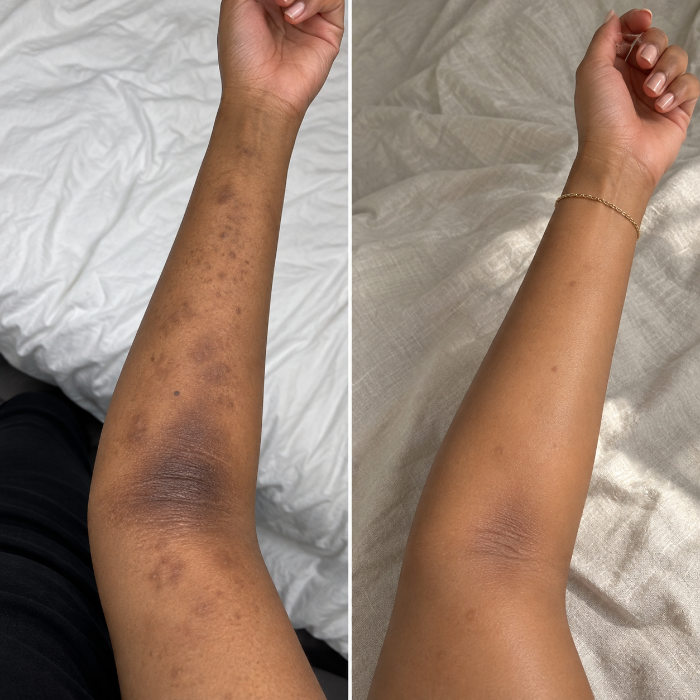
BeforeAfterDanielle's face before and after

“Years of dark marks from bites and shaving. Every one of them left a spot that never faded. Four weeks and my skin is one colour again.”

★★★★★ Danielle O., 34

Post-inflammatory marks · Visible in 4 weeks

BeforeAfterYasmin's underarm before and after

“I tried everything for my dark underarms and nothing touched them. I wore sleeves through two summers. Ten days on this and I can see the difference.”

★★★★★ Yasmin K., 31

Verified purchase · Visible in 10 days

BeforeAfterTiana's neck before and after

“With PCOS the dark patches on my neck always came back. Every single time. Six weeks in they have not, and that is the longest my skin has stayed clear since I was a teenager.”

★★★★★ Tiana W., 27

PCOS · Visible in 6 weeks
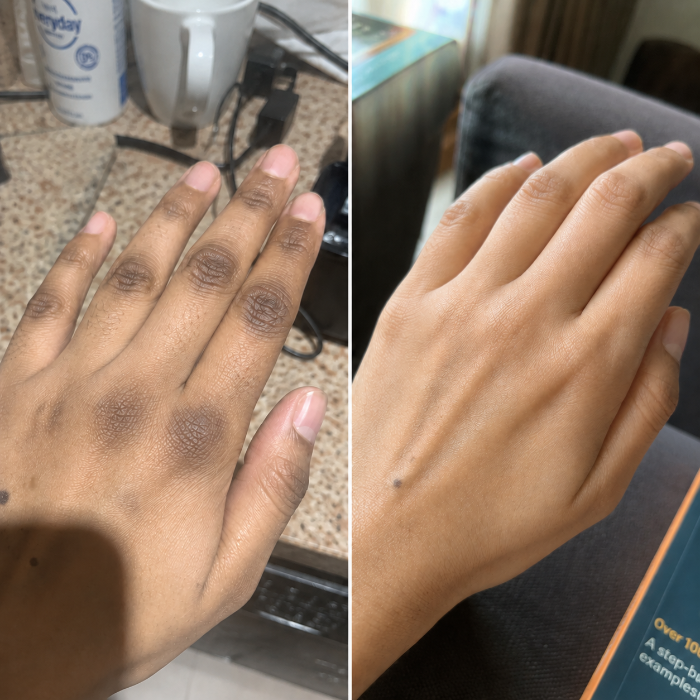
BeforeAfterMichelle's hands before and after

“The dark patches over my knuckles were the thing I noticed in every photo. Four weeks and my hands look like one colour again.”

★★★★★ Michelle A., 36

Verified purchase · Visible in 4 weeks

Elise Warren
Elise WarrenSkin Specialist

Why this is the only one I put my name behind

I do not name products often.

I name this one because it is the only formulation that addresses all five parts of hyperpigmentation in a single daily step, including the hormonal trigger almost nothing else treats, and because the formula is independently verified by Eurofins rather than self-reported.

For anyone who has only been treating the surface, this is where I would start.

Where to get it

Strawberry is currently offering 50% off to new customers on the Triple-Acid Complex for Hyperpigmentation.

60-day guaranteeKeep the bottle, no return needed.

Try the treatment - 50% off

Only sold on the official Strawberry® website.

Try the treatment - 50% off

60-day guarantee. Keep the bottle.

Elise Warren
Monday, September 7th, 2026 By Elise Warren Skin Specialist

Why everything women try for hyperpigmentation fails and what finally gets rid of it

Five treatments. Five different reasons none of them cleared the dark patches.

Five failed hyperpigmentation treatments crossed out: a vitamin C serum, a fade cream, an acid peeling solution, a retinoid gel and a niacinamide serum

Every one of these is still in a bathroom cabinet.

Women have spent hundreds on Amazon's best-selling vitamin C and the $182 luxury one. On drugstore fade creams. On 30% acid peels, on retinoid gels, on kojic soap, maybe on a course of IPL. The patches lighten, and then they come back.

It was never their fault. Every one of those treats pigment that already exists. None of them switched off the cell making it. Here is why each one failed, and what finally holds.

Everything women try removes pigment already made
None of it reached the enzyme that produces melanin
And some of it made the patches worse
1. Vitamin C serums

It brightens everything and fades nothing

A vitamin C serum, crossed out

The best-selling vitamin C serum on Amazon. The $182 luxury C serum aestheticians push. The 23% budget suspension women grab when the first two do not work.

All three are antioxidants. Their real job is neutralising free radicals, and they give skin a general glow within a couple of weeks. That glow is what makes it feel like it is working.

It does inhibit tyrosinase, the enzyme that makes melanin, but only weakly, and only while it is stable.

L-ascorbic acid oxidises on contact with air and light. If your serum has turned orange, it has already degraded. Most of the bottle is spent before you finish it.

So the whole face lifts a shade while the patch stays exactly as dark relative to everything around it. It brightens the background, not the spot.

2. Hydroquinone fade creams

It pauses the pigment and never removes it

A hydroquinone fade cream, crossed out

The big drugstore fade creams are all 2% hydroquinone. Prescription 4% and triple-combo creams are the stronger versions dermatologists write up.

Unlike most of this list, hydroquinone genuinely works. It is the reason women see real fading, and the reason they keep going back to it.

But it is not designed to be used continuously. Dermatologists cycle it in courses of three to four months because prolonged use carries a risk of ochronosis, a blue-grey staining that is far harder to treat than the original patch. It is restricted across the EU for the same reason.

And the moment it stops, the pigment returns. Often darker. Hydroquinone suppresses melanin production without ever reducing the cell's capacity to produce it, so the moment the pressure comes off, it resumes.

Nobody failed at using it. It has a built-in end date, and nothing was ever going to hold the result after it.

3. Acid peels

The one thing that can leave skin worse than before

An acid peeling solution, crossed out

The cult 30% AHA + 2% BHA peeling solution is the one in almost every bathroom. IPL, laser resurfacing and a glycolic peel series are the ones women pay a clinic for.

All of them work by removing or breaking up pigment already in the skin. On sun spots and freckles, that often holds.

On melasma it frequently does not, and this is the part almost nobody is told: melasma is triggered by heat and inflammation as well as by UV.

IPL and aggressive peels deliver both. So the patch lifts for a few weeks and then rebounds, sometimes darker and wider than the original. There is a documented pattern of this.

The risk is higher on deeper skin tones, because more melanin means more pigment available to respond to the injury. Women who paid for treatments and came out worse did nothing wrong. That was the mechanism.

4. Retinoids

It clears the pigment already there and none of the pigment coming

A retinoid gel, crossed out

Over-the-counter adapalene gel has been on shelves since 2016, which makes it the retinoid most women start with. Tretinoin 0.025% is what a doctor writes up. A ‘gentle’ granactive retinoid serum is what women switch to when the first two sting.

All of them accelerate cell turnover, so pigmented cells reach the surface and shed faster than they otherwise would.

That helps at the margins. But turnover is the exit route, not the source. Retinoids do nothing to the enzyme still manufacturing melanin underneath, so the cell keeps sending more up.

And they irritate. Redness, peeling and stinging are the normal response, particularly in the first six weeks.

Irritation is inflammation, and inflammation is itself a cause of pigmentation. On medium and deep skin tones a retinoid can generate the exact post-inflammatory marks it was meant to remove.

5. Single-ingredient brighteners

One ingredient cannot fix a problem with five causes

A niacinamide serum, crossed out

The viral 10% niacinamide + zinc serum is one of the highest-volume serums in the world. A 2% alpha arbutin serum sits next to it on the same shelf. Kojic soap and a 10% azelaic acid booster are the two every Reddit thread pushes.

Every one of these is a real active with real evidence behind it. That is what makes this the most frustrating tier.

Each treats exactly one step. Niacinamide slows pigment being handed to surface cells. Arbutin blocks the enzyme partially. Azelaic acid does a little of both.

Pigmentation runs five pathways at once: production, deposited pigment, a hormonal trigger, inflammation, and UV. Fix one and the other four keep running.

Kojic soap has a second problem on top. It is a wash-off. Thirty seconds of contact and it goes down the drain, which is nowhere near long enough to affect anything.

What actually works

The three depths pigmentation has to be treated at

Every product above failed for one of two reasons. It treated pigment that already existed, or it worked one pathway while four others carried on.

Melanin is made deep, travels up, and lands on the surface. A treatment has to meet it at all three points, or it is clearing the top while the bottom refills.

Kojic acid · at the source

Inhibits tyrosinase, the enzyme inside the melanocyte that manufactures melanin. Less pigment gets made in the first place.

Alpha-arbutin · mid-layer

Blocks pigment on its way up, before it is deposited into the cells you can actually see.

Glycolic acid · surface

Clears the pigment already deposited, so the patch you can see today fades while the two layers below it are being shut down.

The first one is the difference. Kojic acid is the only one of the three that reaches the cell where melanin is actually made.

Use all three together, daily, and the patch fades instead of returning.

The one formula that does it

Do THIS to get rid of dark patches at the source, and finally feel confident bare-faced again

A face with melasma across the forehead and cheeks beside the same face clear and even
★★★★★Rated 4.9Over 200k Users

Only one treatment puts all three depths in a single leave-on formula at clinical strength: Strawberry's Triple-Acid Complex for Hyperpigmentation.

Kojic acid at the melanocyte. Alpha-arbutin through the mid-layer. Glycolic acid clearing the surface.

And it adds the two nothing else does. Tranexamic acid for the hormonal trigger, niacinamide for the inflammation. All five, one step.

A single-active brightener treats one cause; the Strawberry Triple-Acid Complex treats all five Try the treatment - 50% off

60-day guarantee. Keep the bottle, no return needed.

Why it works 01

Kojic acid stops the skin making the dark pigment

The hero active
Kojic Acid 2%

Inhibits tyrosinase, the enzyme that produces melanin, so less pigment is made in the first place.

This is the part every product on the list above skips.

A dark patch is not a stain on the surface. It is melanin that a cell called a melanocyte has already manufactured and pushed upward. By the time you can see it, the work is finished.

Kojic acid inhibits tyrosinase, the enzyme inside that cell that makes melanin in the first place. Block the enzyme and you reduce what the cell can produce.

A vitamin C serum brightens what has already surfaced. It does not touch the enzyme. That is why the patch fades and then comes straight back.

Why it works 02

It also fades the dark patches already there

At the source
Kojic Acid 2%

Stops melanin being made

Mid-layer
Alpha-Arbutin 2%

Blocks pigment on its way up

Surface
Glycolic Acid 5%

Clears the pigment already there

A single-active brightener has to pick a depth.

The Triple-Acid Complex for Hyperpigmentation is the only treatment that works on all three together. Kojic acid at the melanocyte. Alpha-arbutin through the mid-layer. Glycolic acid clearing the surface.

Choose one and you treat a third of the problem. That is why a 20% vitamin C serum can feel powerful and still leave the patch there.

One active
Treats
one layer
Triple-Acid Complex
Treats
all three
Why it works 03

It treats the hormone problem that keeps bringing the patches back

The cause almost nothing treats
Tranexamic Acid 2%

Interrupts the hormonal signal that keeps telling the skin to make more pigment.

This is the one that changes outcomes, and the reason nothing on the earlier list held.

Melasma, the patches after pregnancy, and the discoloration on the neck and underarms that comes with PCOS all share a driver. A hormonal signal keeps telling the melanocyte to produce.

You can fade the surface as often as you like. While that signal is firing, the pigment is being replaced underneath.

Tranexamic acid interrupts that signal. It is why this formula holds where brighteners alone do not, and why it works for women with PCOS rather than in spite of it.

Why it works 04

It stops new dark spots forming while the old ones fade

Niacinamide 5%
Calms the inflammation that darkens marks
Slows pigment transfer to the surface

Fading is only half of clear.

Every spot, every shave bump, every patch of friction leaves inflammation behind, and inflammation is what turns a small mark into a dark one.

So while old patches fade, new ones are being laid down. The tone never fully evens out.

Niacinamide at 5% calms that inflammation and slows pigment transfer to the surface, so existing marks fade faster than new ones can appear.

Why it works 05

Independently tested and verified by Eurofins

Everything above is a hypothesis until real skin proves it.

Here is what women with PCOS-related hyperpigmentation keep reporting:

✓

Dark patches fadedIn 2 weeks

✓

Brighter, even toneBy week 4

✓

Faded underarm and thigh spotsWhere it shows most

✓

Results held with daily SPFNo rebound

From customer reports.

Then there is the part almost nobody checks. In a category where "brightening" is unregulated, most skincare self-certifies its own formula.

This one does not. Every batch is independently tested by Eurofins, one of the largest testing laboratories in the world, and the certificate is published.

Eurofins Certificate of Analysis for the Strawberry Triple-Acid Complex for Hyperpigmentation

Published for every batch.

What to expect

Here is what happens once women start

The Strawberry Ultra-Strength Hyperpigmentation Brightening Cream

Pigment fades on a schedule, not overnight. What this does is improve on a predictable one.

First 5 uses
Skin looks brighter and clearer, before any patch has moved.
Week 2
Dark patches visibly lighten at the edges first.
Week 4
Tone evens out across the whole area, not just the patch.
Week 8
Older marks and post-inflammatory pigment fade. These are always the slowest.
Ongoing
Because the hormonal trigger does not go away, results hold as long as you keep going. Stop, and the pigment returns.
Real results

Not just a few results. Over 100,000 women.

Photographs sent in by customers. No retouching, same lighting, same distance.

BeforeAfterImani's forehead and cheeks before and after

“Melasma across my whole forehead and cheeks since my second pregnancy. I stopped letting people take pictures of me. Two weeks in, my husband asked if I had had something done.”

★★★★★ Imani D., 33

Melasma · Visible in 2 weeks

BeforeAfterJazmine's face before and after

“Hydroquinone, three peels, and a dermatologist who told me to just accept it. This did more in three weeks than all of that did in four years.”

★★★★★ Jazmine R., 29

Former hydroquinone user · Visible in 3 weeks

BeforeAfterDanielle's face before and after

“Years of dark marks from bites and shaving. Every one of them left a spot that never faded. Four weeks and my skin is one colour again.”

★★★★★ Danielle O., 34

Post-inflammatory marks · Visible in 4 weeks

BeforeAfterYasmin's underarm before and after

“I tried everything for my dark underarms and nothing touched them. I wore sleeves through two summers. Ten days on this and I can see the difference.”

★★★★★ Yasmin K., 31

Verified purchase · Visible in 10 days

BeforeAfterTiana's neck before and after

“With PCOS the dark patches on my neck always came back. Every single time. Six weeks in they have not, and that is the longest my skin has stayed clear since I was a teenager.”

★★★★★ Tiana W., 27

PCOS · Visible in 6 weeks

BeforeAfterMichelle's hands before and after

“The dark patches over my knuckles were the thing I noticed in every photo. Four weeks and my hands look like one colour again.”

★★★★★ Michelle A., 36

Verified purchase · Visible in 4 weeks

Elise Warren
Elise WarrenSkin Specialist

Why this is the only one I put my name behind

I do not name products often.

I name this one because it is the only formulation that addresses all five parts of hyperpigmentation in a single daily step, including the hormonal trigger almost nothing else treats, and because the formula is independently verified by Eurofins rather than self-reported.

For anyone who has only been treating the surface, this is where I would start.

Where to get it

Strawberry is currently offering 50% off to new customers on the Triple-Acid Complex for Hyperpigmentation.

60-day guaranteeKeep the bottle, no return needed.

Try the treatment - 50% off

Only sold on the official Strawberry® website.

Try the treatment - 50% off

60-day guarantee. Keep the bottle.