At the source
Kojic Acid 2%
Stops melanin being made
Even if the patches keep coming back, the problem was never you. It was the formula.

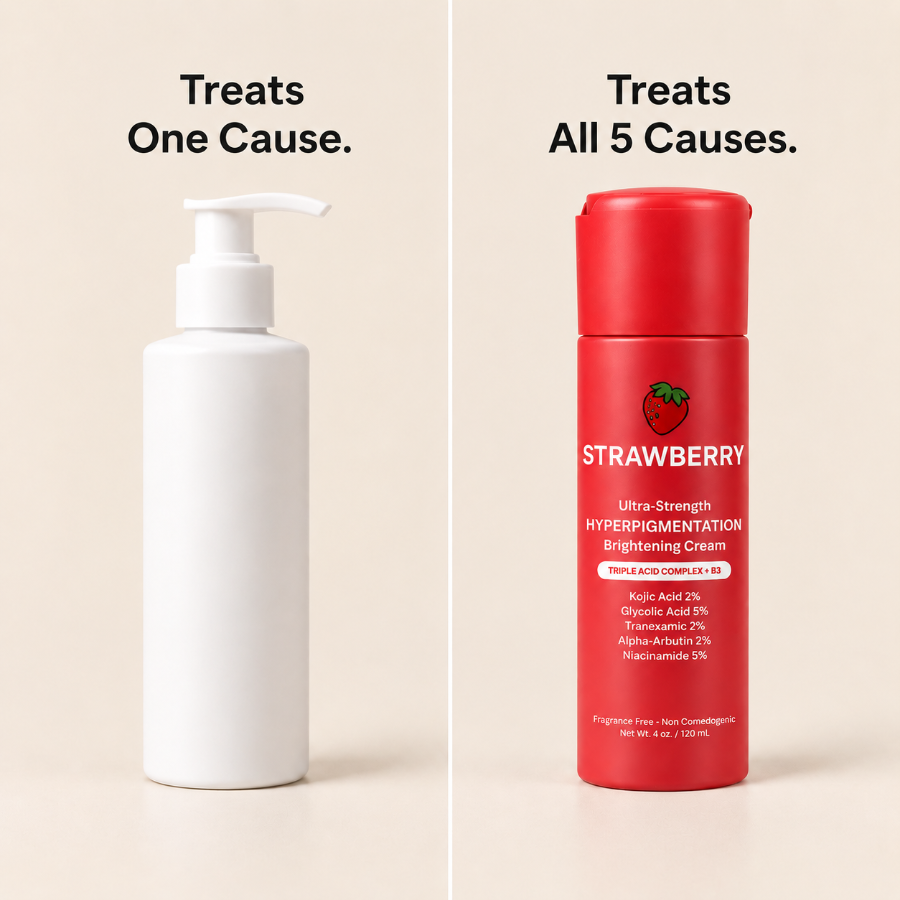
If you have dark patches, you have almost certainly tried a vitamin C serum, a hydroquinone cream, maybe a course of peels. You are not doing anything wrong. Each of those treats one part of a problem that has five.
The five-part problem
Hyperpigmentation needs five things addressed at once. This is the only daily treatment that does all five.
Fade four and leave one, and the patch lightens for a month and then returns. That is why most pigmentation routines stall.
Below are the five reasons that separate this formula from everything else in the category, in the order they matter.
Inhibits tyrosinase, the enzyme that produces melanin, so less pigment is made in the first place.
This is the reason I recommend it, and it is the part almost every other product skips.
A dark patch is not a stain on the surface. It is melanin that a cell called a melanocyte has already manufactured and pushed upward. By the time you can see it, the work is finished.
Kojic acid inhibits tyrosinase, the enzyme inside that cell that makes melanin in the first place. Block the enzyme and you reduce what the cell can produce.
A vitamin C serum brightens what has already surfaced. It does not touch the enzyme. That is why the patch fades and then comes straight back.
Stops melanin being made
Blocks pigment on its way up
Clears the pigment already there
A single-active brightener has to pick a depth.
The Triple-Acid Complex for Hyperpigmentation is the only treatment that works on all three together. Kojic acid at the melanocyte. Alpha-arbutin through the mid-layer. Glycolic acid clearing the surface.
Choose one and you treat a third of the problem. That is why a 20% vitamin C serum can feel powerful and still leave the patch there.
Interrupts the hormonal signal that keeps telling your skin to make more pigment.
This is the one that changes outcomes for the patients I see most often.
Melasma, the dark patches after pregnancy, and the velvety discoloration on the neck and underarms that comes with PCOS all share a driver. A hormonal signal keeps telling the melanocyte to produce.
You can fade the surface for as long as you like. While that signal is still firing, the pigment is being replaced underneath.
Tranexamic acid interrupts that signal. It is the reason this formula holds where brighteners alone do not, and the reason it works for women with PCOS rather than in spite of it.
Calms the inflammation that darkens every new mark, and slows pigment reaching the surface.
Fading is only half of clear.
Every spot, every shave bump, every patch of friction leaves inflammation behind, and inflammation is what turns a small mark into a dark one. Dermatologists call it post-inflammatory hyperpigmentation.
So while you are fading old patches, new ones are being laid down. The tone never fully evens out.
Niacinamide at 5% calms that inflammation and slows pigment transfer to the skin's surface, so the marks you have fade faster than new ones can appear.
Everything above is a hypothesis until someone measures it. This formula was measured in an independent clinical study on women with PCOS-related hyperpigmentation.
Dark patches fadedIn 2 weeks
Brighter, even toneBy week 4
Faded underarm and thigh spotsWhere it shows most
Results held with daily SPFNo rebound
Independent clinical study. Individual results vary.
Then there is the part almost nobody checks. In a category where "brightening" is unregulated, most skincare self-certifies its own formula.
This one does not. Every batch is independently tested by Eurofins, one of the largest testing laboratories in the world, and the certificate of analysis is published.
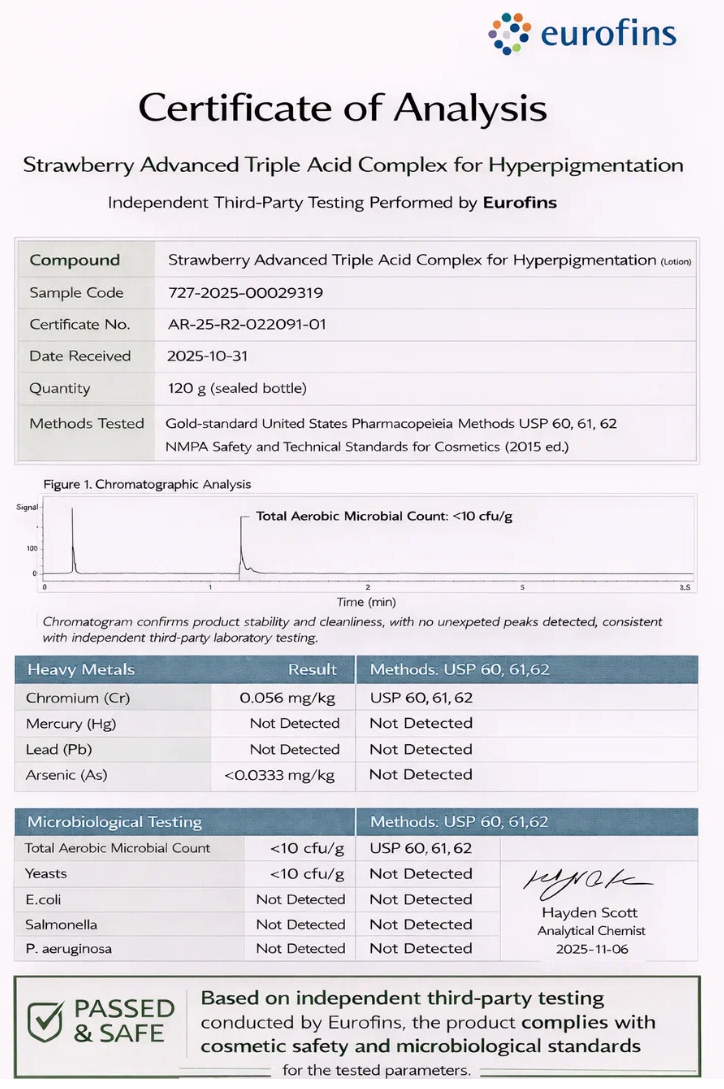
Published for every batch.
Pigment fades on a schedule, not overnight. What this does is improve on a predictable one.
Photographs sent in by customers. No retouching, same lighting, same distance.
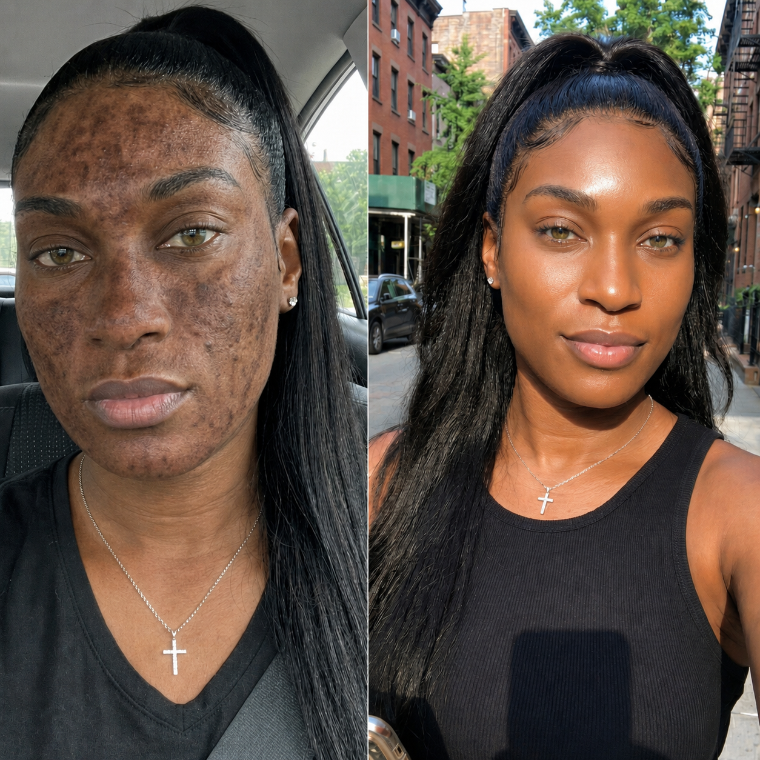
“Melasma across my whole forehead and cheeks since my second pregnancy. I stopped letting people take pictures of me. Two weeks in, my husband asked if I had had something done.”
★★★★★ Imani D., 33
Melasma · Visible in 2 weeks
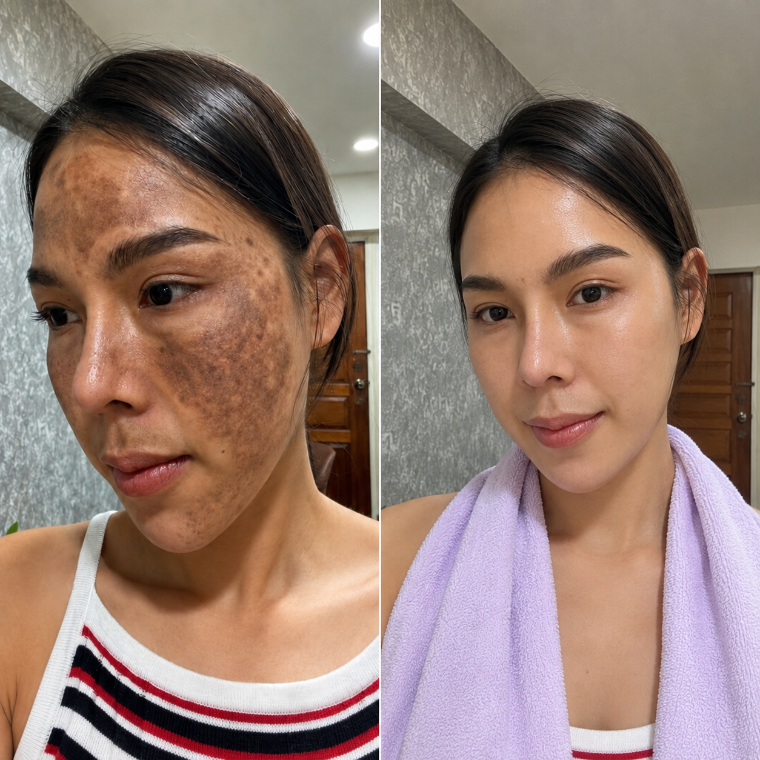
“Hydroquinone, three peels, and a dermatologist who told me to just accept it. This did more in three weeks than all of that did in four years.”
★★★★★ Jazmine R., 29
Former hydroquinone user · Visible in 3 weeks
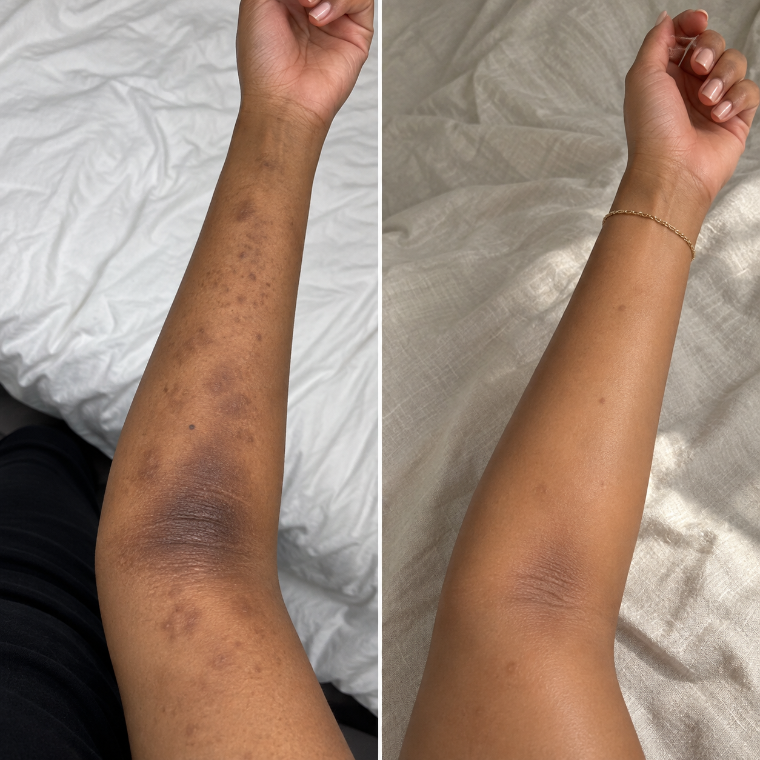
“Years of dark marks on my arms from bites and shaving. Every one of them left a spot that never faded. Four weeks and my arms are one colour again.”
★★★★★ Danielle O., 34
Post-inflammatory marks · Visible in 4 weeks
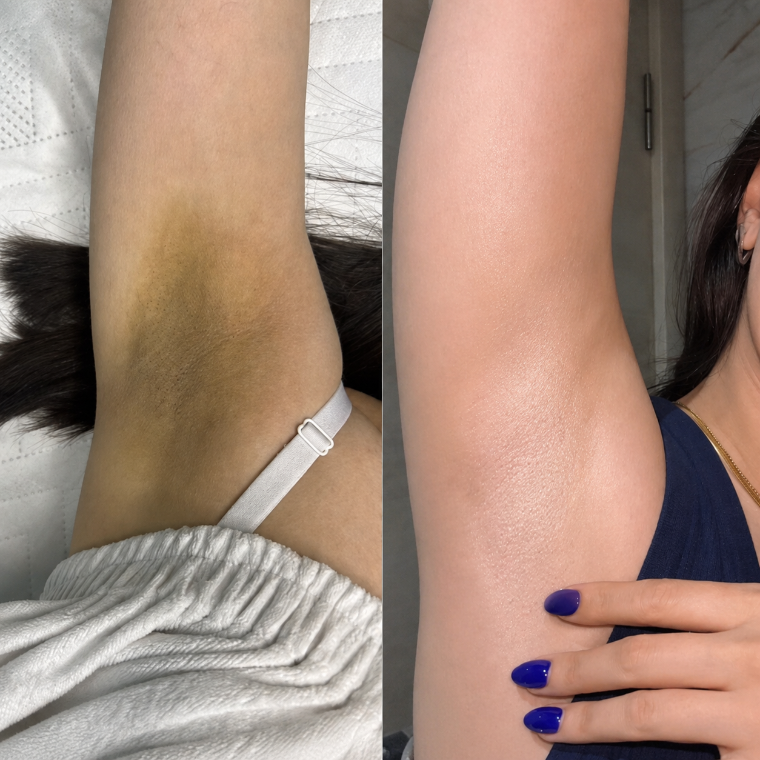
“I tried everything for my dark underarms and nothing touched them. I wore sleeves through two summers. Ten days on this and I can see the difference.”
★★★★★ Yasmin K., 31
Verified purchase · Visible in 10 days
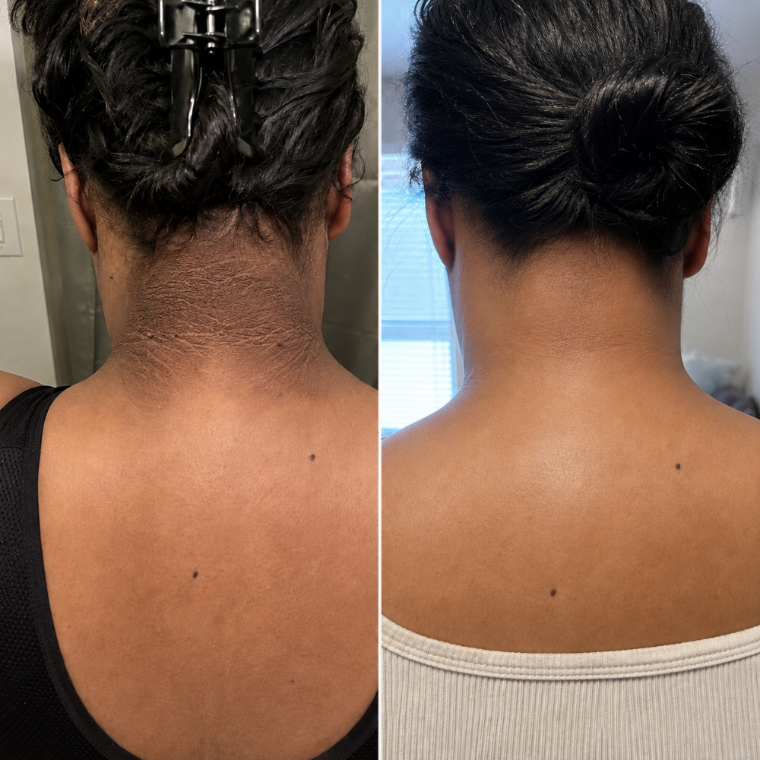
“With PCOS the dark patches on my neck always came back. Every single time. Six weeks in they have not, and that is the longest my skin has stayed clear since I was a teenager.”
★★★★★ Tiana W., 27
PCOS · Visible in 6 weeks
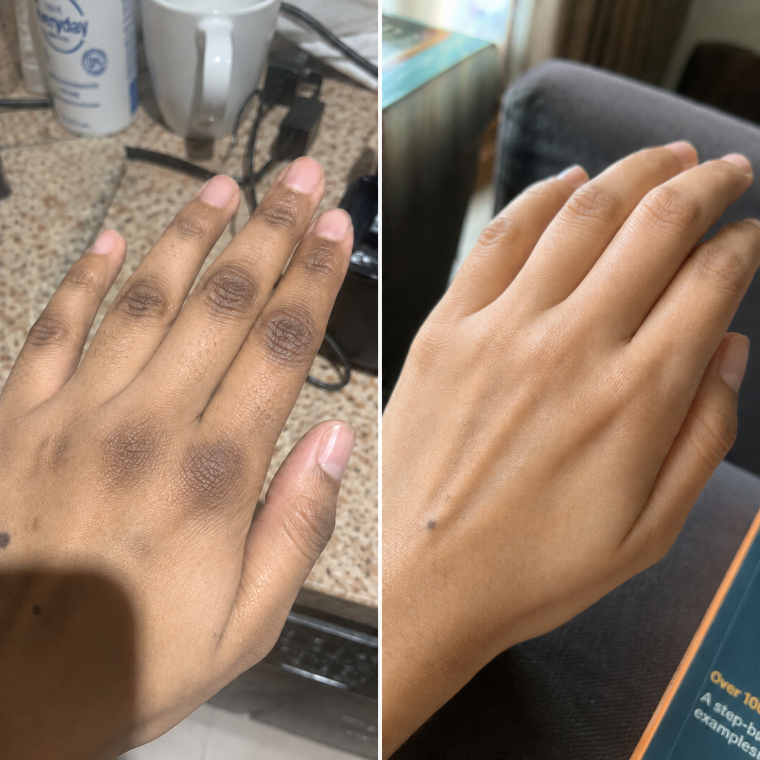
“The dark patches over my knuckles were the thing I noticed in every photo. Four weeks and my hands look like one colour again.”
★★★★★ Michelle A., 36
Verified purchase · Visible in 4 weeks
I do not recommend many products by name.
I recommend this one because it is the only formulation I have found that addresses all five parts of hyperpigmentation in a single daily step, including the hormonal trigger almost nothing else treats, and because the results are independently verified rather than self-reported.
If you have dark patches and you have been treating the surface, this is where I would start.
Where to get it
Strawberry is currently offering 50% off to new customers on the Triple-Acid Complex for Hyperpigmentation.
60-day full refundKeep the bottle, no return needed.
Try it now - 50% offOnly sold on the official Strawberry® website.
60-day full refund · keep the bottle, no return needed
Even if the patches keep coming back, the problem was never you. It was the formula.
If you have dark patches, you have almost certainly tried a vitamin C serum, a hydroquinone cream, maybe a course of peels. You are not doing anything wrong. Each of those treats one part of a problem that has five.
The five-part problem
Hyperpigmentation needs five things addressed at once. This is the only daily treatment that does all five.
Fade four and leave one, and the patch lightens for a month and then returns. That is why most pigmentation routines stall.
Below are the five reasons that separate this formula from everything else in the category, in the order they matter.
This is the reason I recommend it, and it is the part almost every other product skips.
A dark patch is not a stain on the surface. It is melanin that a cell called a melanocyte has already manufactured and pushed upward. By the time you can see it, the work is finished.
Kojic acid inhibits tyrosinase, the enzyme inside that cell that makes melanin in the first place. Block the enzyme and you reduce what the cell can produce.
A vitamin C serum brightens what has already surfaced. It does not touch the enzyme. That is why the patch fades and then comes straight back.
Inhibits tyrosinase, the enzyme that produces melanin, so less pigment is made in the first place.
Stops melanin being made
Blocks pigment on its way up
Clears the pigment already there
A single-active brightener has to pick a depth.
The Triple-Acid Complex for Hyperpigmentation is the only treatment that works on all three together. Kojic acid at the melanocyte. Alpha-arbutin through the mid-layer. Glycolic acid clearing the surface.
Choose one and you treat a third of the problem. That is why a 20% vitamin C serum can feel powerful and still leave the patch there.
This is the one that changes outcomes for the patients I see most often.
Melasma, the dark patches after pregnancy, and the velvety discoloration on the neck and underarms that comes with PCOS all share a driver. A hormonal signal keeps telling the melanocyte to produce.
You can fade the surface for as long as you like. While that signal is still firing, the pigment is being replaced underneath.
Tranexamic acid interrupts that signal. It is the reason this formula holds where brighteners alone do not, and the reason it works for women with PCOS rather than in spite of it.
Interrupts the hormonal signal that keeps telling your skin to make more pigment.
Fading is only half of clear.
Every spot, every shave bump, every patch of friction leaves inflammation behind, and inflammation is what turns a small mark into a dark one. Dermatologists call it post-inflammatory hyperpigmentation.
So while you are fading old patches, new ones are being laid down. The tone never fully evens out.
Niacinamide at 5% calms that inflammation and slows pigment transfer to the skin's surface, so the marks you have fade faster than new ones can appear.
Calms the inflammation that darkens every new mark, and slows pigment reaching the surface.
Everything above is a hypothesis until someone measures it. This formula was measured in an independent clinical study on women with PCOS-related hyperpigmentation.
Dark patches fadedIn 2 weeks
Brighter, even toneBy week 4
Faded underarm and thigh spotsWhere it shows most
Results held with daily SPFNo rebound
Independent clinical study. Individual results vary.
Then there is the part almost nobody checks. In a category where "brightening" is unregulated, most skincare self-certifies its own formula.
This one does not. Every batch is independently tested by Eurofins, one of the largest testing laboratories in the world, and the certificate of analysis is published.
Published for every batch.
Pigment fades on a schedule, not overnight. What this does is improve on a predictable one.
Photographs sent in by customers. No retouching, same lighting, same distance.
“Melasma across my whole forehead and cheeks since my second pregnancy. I stopped letting people take pictures of me. Two weeks in, my husband asked if I had had something done.”
★★★★★ Imani D., 33
Melasma · Visible in 2 weeks
“Hydroquinone, three peels, and a dermatologist who told me to just accept it. This did more in three weeks than all of that did in four years.”
★★★★★ Jazmine R., 29
Former hydroquinone user · Visible in 3 weeks
“Years of dark marks on my arms from bites and shaving. Every one of them left a spot that never faded. Four weeks and my arms are one colour again.”
★★★★★ Danielle O., 34
Post-inflammatory marks · Visible in 4 weeks
“I tried everything for my dark underarms and nothing touched them. I wore sleeves through two summers. Ten days on this and I can see the difference.”
★★★★★ Yasmin K., 31
Verified purchase · Visible in 10 days
“With PCOS the dark patches on my neck always came back. Every single time. Six weeks in they have not, and that is the longest my skin has stayed clear since I was a teenager.”
★★★★★ Tiana W., 27
PCOS · Visible in 6 weeks
“The dark patches over my knuckles were the thing I noticed in every photo. Four weeks and my hands look like one colour again.”
★★★★★ Michelle A., 36
Verified purchase · Visible in 4 weeks
I do not recommend many products by name.
I recommend this one because it is the only formulation I have found that addresses all five parts of hyperpigmentation in a single daily step, including the hormonal trigger almost nothing else treats, and because the results are independently verified rather than self-reported.
If you have dark patches and you have been treating the surface, this is where I would start.
Where to get it
Strawberry is currently offering 50% off to new customers on the Triple-Acid Complex for Hyperpigmentation.
60-day full refundKeep the bottle, no return needed.
Try it now - 50% offOnly sold on the official Strawberry® website.