7 reasons 100,000 women with hyperpigmentation use the Triple Acid Complex for Glass Skin
Glass skin is the look everyone wants. If your dark patches keep coming back, the problem was never you. It was the formula.

Over 100,000 women have switched. These are some of them.
“Glass skin isn't a filter. It's skin so even it catches the light. Hyperpigmentation takes that away, and single-purpose brighteners only fix one of the five causes behind it, which is why the patches always came back.”

How it compares
Strawberry's Triple Acid Complex vs. the hydroquinone and retinoid routes most women try first.
7 reasons it gets you glass skin
Glass skin in 2 weeks, not at month 3
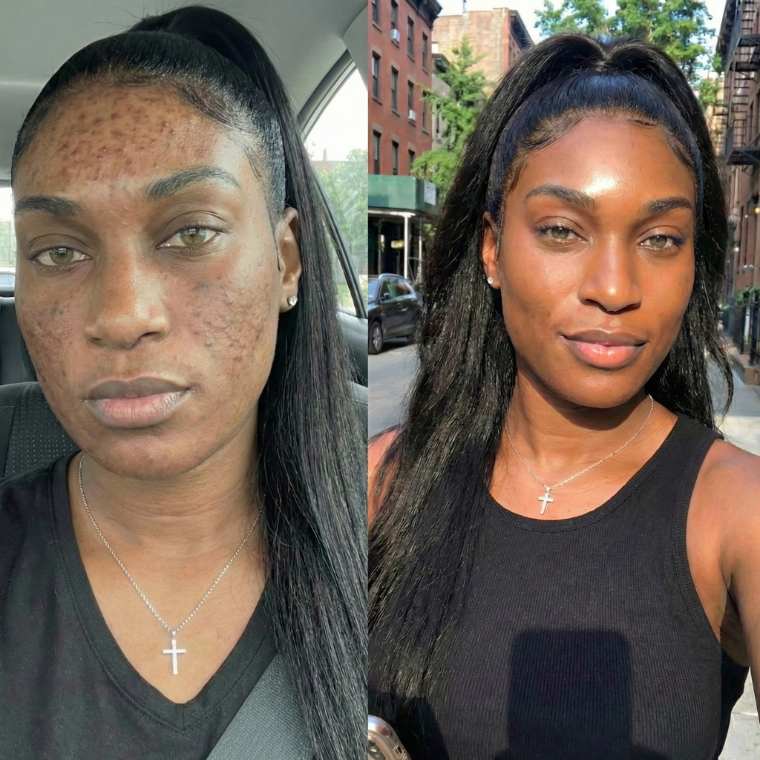
Two weeks. That is the whole story, and it is the reason this page exists.
In an independent clinical study on women with moderate to severe PCOS-related hyperpigmentation, 87% saw dark patches visibly fade in 2 weeks, and 92% reported brighter, more even tone by week 4.
The 12 week timeline you see everywhere exists because single-purpose products work one pathway at a time. Exfoliate, then brighten, then repair, in sequence. When all five run at once, the change shows up faster.
Most women notice it first in the shower, or in a photo they weren't expecting to like.
Glass skin needs all five causes of pigment treated, not one
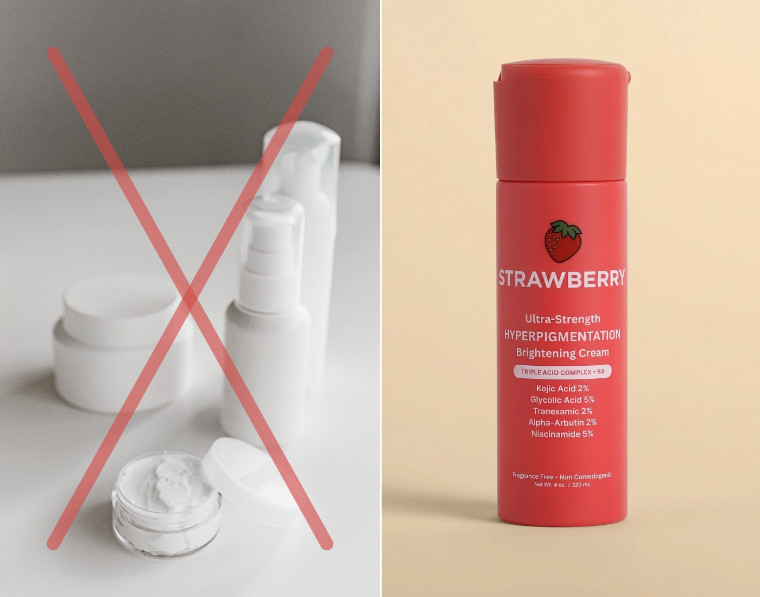
Glass skin means two things: tone so even it looks lit from inside, and skin clear enough to go bare-faced. Hyperpigmentation works against both at once, through five causes running together.
A vitamin C serum treats one. A hydroquinone cream treats another. The other four keep going, which is why a patch fades for a few weeks and then comes right back.
The Triple Acid Complex runs 5% glycolic, 2% kojic and 2% tranexamic acid alongside 2% alpha-arbutin and 5% niacinamide, in one formula that works on all five at once.
Women who cycled through brighteners for years all say the same thing. The cycle finally stops.
Glass skin in one step, with no routine to build around it
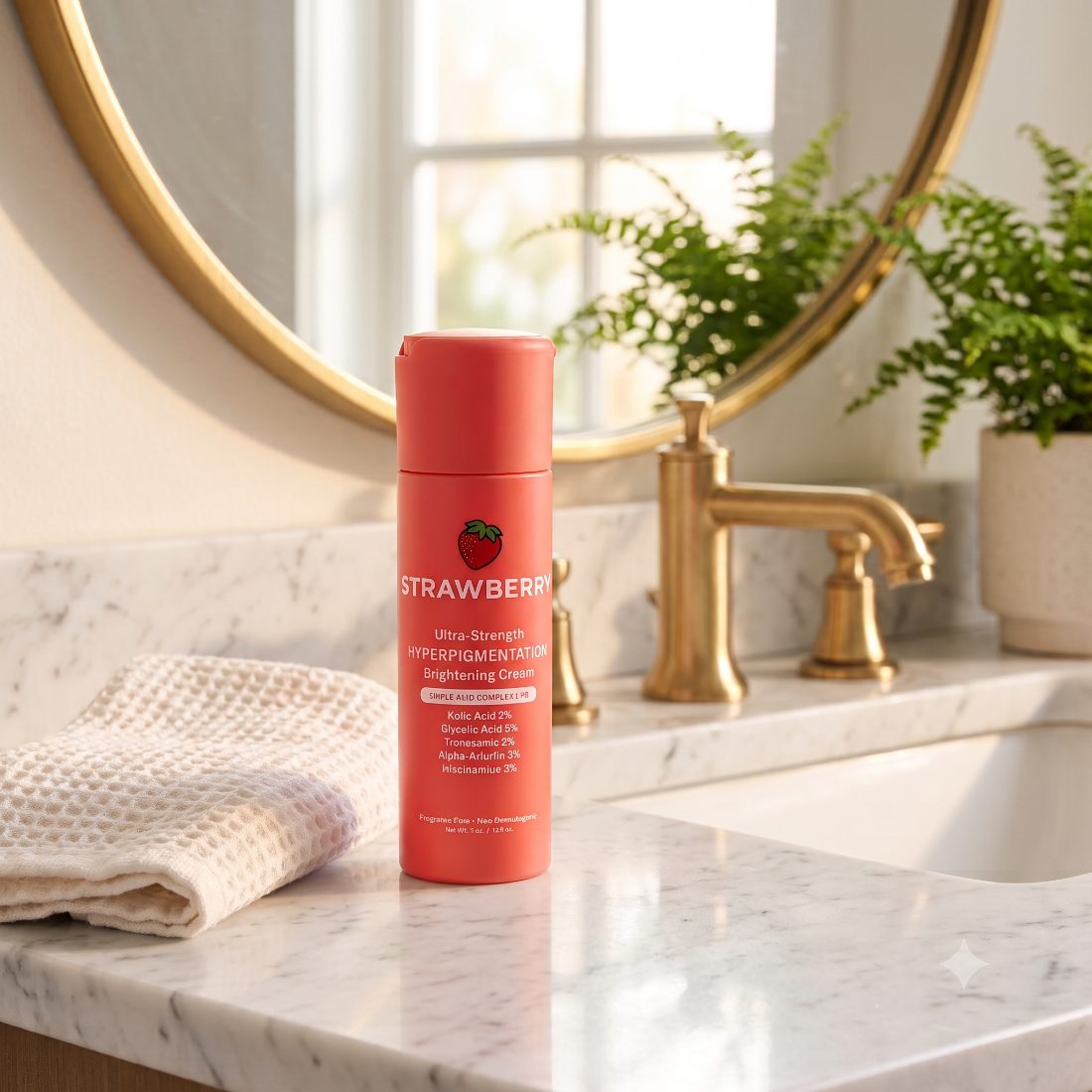
Most pigmentation treatments assume you'll rearrange your day around them: a separate acid, a separate brightener, a barrier cream to repair what the acid did, and a wait before sunscreen.
It's the same story across hydroquinone, retinoids, and the serum stacks people build to avoid them.
The Triple Acid Complex runs resurfacing, pigment blocking and barrier repair in a single step. One pump, once a day. It sinks in within seconds, leaves no film, and goes straight under sunscreen or makeup.
Glass skin means treating the hormonal cause, not just the patch
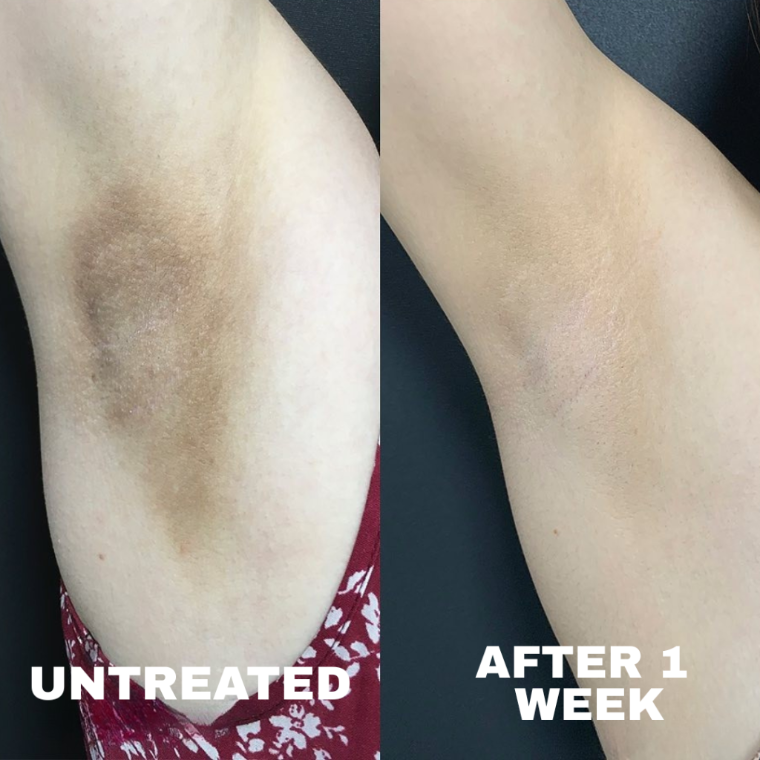
Of those five causes, this is the one every other product ignores. With PCOS-related hyperpigmentation, hormonal imbalance pushes the skin to overproduce melanin. Exfoliants and vitamin C lift the pigment that's already there. They don't touch what keeps making it.
Tranexamic acid interrupts that hormonal trigger, and alpha-arbutin blocks the enzyme behind excess melanin. Niacinamide calms the inflammation that darkens a mark after it forms.
That's the difference between a patch that fades for a month and skin that holds its tone, the kind you stop checking in every mirror you pass.
Eurofins verifies every batch, so glass skin isn't a label claim
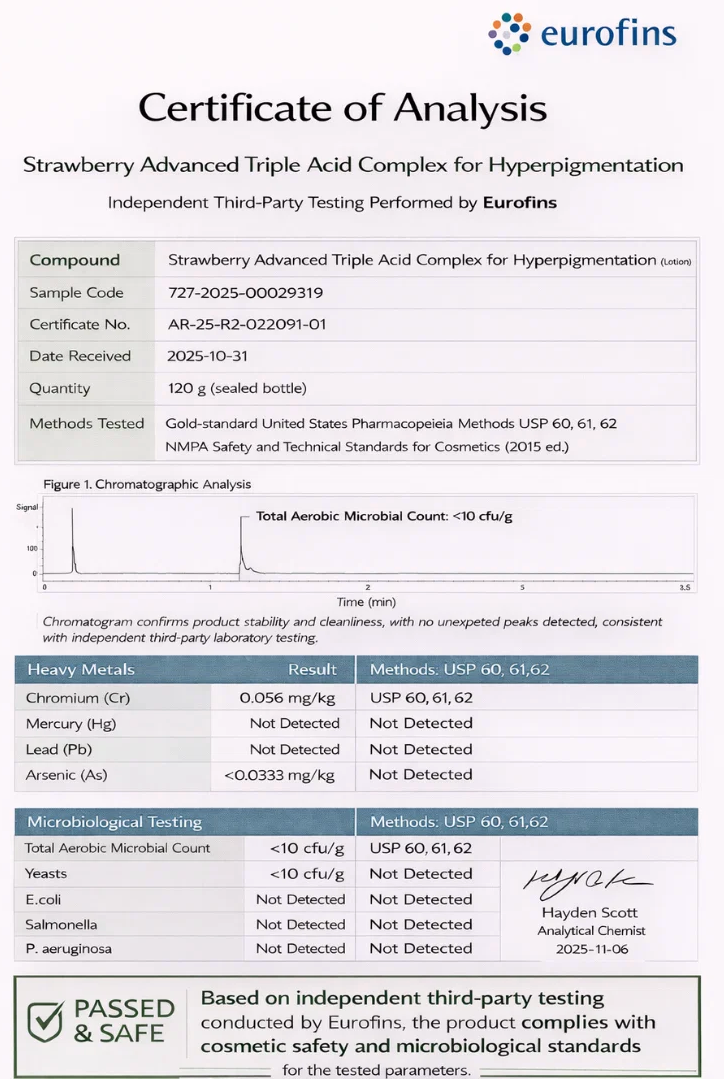
Most skincare runs on self-certification. Nothing independent confirms that the active concentrations on the label match what's actually in the bottle.
The Triple Acid Complex has a publicly available Eurofins Certificate of Analysis, published batch by batch.
In a category where "brightening" is unregulated, that document is the one that counts. It's the reason the glass skin results hold up bottle after bottle.
The same glass skin pattern appears across 6,000+ reviews
What shows up consistently across verified purchases isn't simply "it worked."
Women who'd already spent years on hydroquinone, vitamin C serums, and prescription retinoids keep describing the same turning point, around week 2, when the patches lighten and the tone around them evens out at the same time.
Even tone and clear skin, together. That's glass skin, and it turns up in thousands of independent verified reviews. Not a slogan. A pattern.

"Melasma across both cheeks since my second pregnancy. I stopped letting people take pictures of me. Two weeks in, my husband asked if I'd had something done. I hadn't."
Imani D., 33
Melasma · Visible in 2 weeks

"Hydroquinone, three peels, and a dermatologist who told me to just accept it. This did more in three weeks than all of that did in four years. My skin actually catches the light now."
Jazmine R., 29
Former hydroquinone user · Visible in 3 weeks

"With PCOS the dark patches always came back. Every single time. Six weeks in they haven't, and that's the longest my skin has stayed clear since I was a teenager."
Tiana W., 27
PCOS · Subscribed after first bottle
What a 60-day guarantee tells you about a glass skin claim
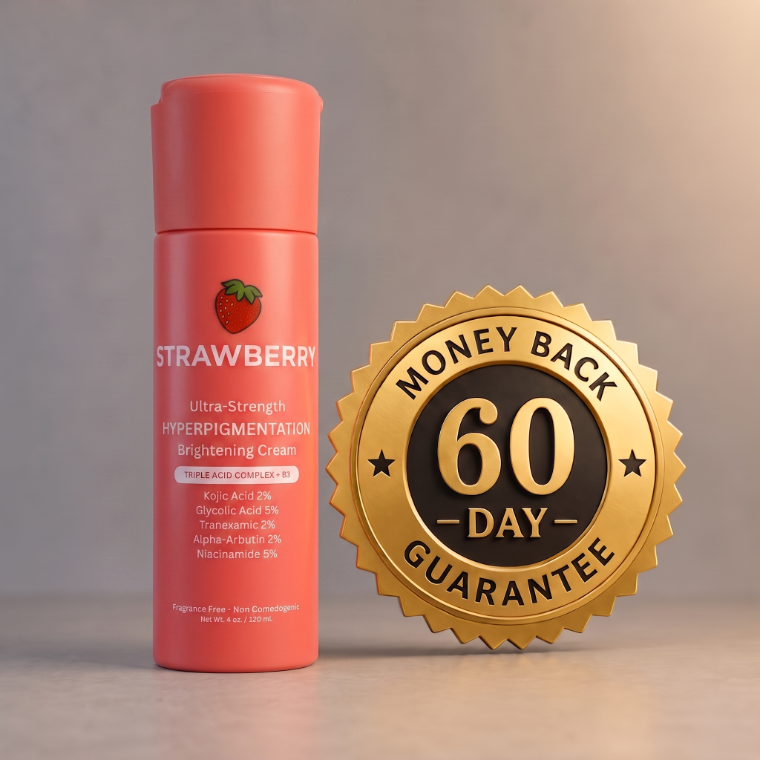
Most skincare brands don't offer unconditional refunds, because they can't afford to.
A 60-day money-back guarantee signals one thing: the manufacturer expects the product to work inside that window.
For anyone who has spent years on brighteners with no such backing, that structure is worth noting. A brand only guarantees the glass skin results it's confident you'll see.
Ready for glass skin you actually want to show?

One pump a day. Five pigmentation pathways at once: resurfacing, pigment blocking, hormonal interruption, inflammation control and barrier repair. Skin even enough to leave bare.
60-day guarantee. Full refund, keep the bottle.