

If you’re dealing with strawberry skin, you’ve probably come across two ingredients that show up in almost every recommendation:
👉 Salicylic acid
👉 Lactic acid
Both are widely used in strawberry skin treatment, keratosis pilaris treatment, and routines targeting chicken skin on arms, chicken skin on legs, and bumpy skin on arms.
But here’s the real question:
👉 Which one actually works better for strawberry skin?
Quick Answer
Salicylic acid works better for clearing clogged pores and dark dots, while lactic acid works better for smoothing rough, bumpy texture. For most people, the best results come from using both together.
Key Takeaways
- Salicylic acid (BHA) penetrates deep into pores and is best for strawberry legs and dark dots
- Lactic acid (AHA) exfoliates the surface and hydrates, making it ideal for keratosis pilaris and rough texture
- Most people have a combination of both issues
- The best kp treatment uses a multi-acid approach
- Using only a keratosis pilaris moisturizer is not enough
- Consistency is more important than product strength

What Causes Strawberry Skin?
To understand which ingredient works better, you need to understand what you’re treating.
Strawberry skin (often called strawberry skin legs) is not a single condition—it’s a combination of issues:
- Clogged hair follicles
- Oxidized oil (dark dots)
- Ingrown hairs
- Dead skin buildup
- Dry skin
At the same time, many people also have keratosis pilaris, commonly known as:
- Chicken skin
- Bumpy skin on arms
- Rough patches on legs
This happens when keratin builds up inside hair follicles, creating small bumps.
👉 So in reality, you’re dealing with:
- Surface roughness
- Deep pore congestion
This is why choosing the right ingredient—or combination—matters.

What Is Salicylic Acid?
Salicylic acid is a beta-hydroxy acid (BHA) that is oil-soluble.
How It Works
Unlike surface exfoliants, salicylic acid can:
- Penetrate deep into pores
- Dissolve oil and debris
- Clear clogged follicles
This makes it especially effective for:
- Strawberry legs treatment
- Dark dots and visible pores
- Ingrown hairs
Benefits of Salicylic Acid
- Clears pore buildup
- Reduces dark dots
- Prevents ingrown hairs
- Improves overall skin clarity
Limitations
- Can be drying if overused
- Doesn’t fully address rough texture
- Needs to be paired with hydration

What Is Lactic Acid?
Lactic acid is an alpha hydroxy acid (AHA) that works on the skin’s surface.
How It Works
It helps by:
- Removing dead skin cells
- Smoothing rough texture
- Hydrating the skin
Unlike stronger AHAs, lactic acid is gentle and suitable for sensitive skin.
Benefits of Lactic Acid
- Smooths bumpy skin on arms
- Softens chicken skin on legs
- Hydrates while exfoliating
- Improves skin tone
Role in Keratosis Pilaris Treatment
Lactic acid is one of the most common ingredients found in:
- Keratosis pilaris lotion
- Keratosis pilaris cream
- Moisturizer for KP
Because it directly helps break down keratin buildup.
Limitations
- Doesn’t penetrate deep pores
- Slower results for dark dots
- Needs consistent use
Salicylic Acid vs Lactic Acid: Side-by-Side Comparison
Feature |
Salicylic Acid |
Lactic Acid |
|
Type |
BHA |
AHA |
|
Works Where |
Inside pores |
Skin surface |
|
Best For |
Dark dots, clogged follicles |
Rough texture, dryness |
|
Skin Type |
Oily, acne-prone |
Dry, sensitive |
|
Effect on KP |
Indirect |
Direct |
|
Hydration |
No |
Yes |

Which Works Better for Strawberry Skin?
Case 1: You Have Dark Dots (Strawberry Legs)
👉 Salicylic acid is more effective
Because it:
- Targets clogged follicles
- Reduces oxidation
- Clears pores
Case 2: You Have Rough, Bumpy Skin
👉 Lactic acid works better
Because it:
- Smooths texture
- Breaks down keratin
- Hydrates skin
Case 3: You Have Both (Most Common Scenario)
👉 You need both
This is true for most people dealing with:
- Strawberry skin
- Keratosis pilaris
- Chicken skin treatment needs
Why Using Only One Ingredient Often Fails
Many people rely on:
- A single keratosis pilaris moisturizer
- Or one exfoliating product
But strawberry skin is a multi-factor condition involving:
- Keratin buildup
- Oil and debris
- Dryness
- Irritation
So using only:
- The best lotion for keratosis pilaris
- Or the best cream for keratosis pilaris
…won’t fully solve the issue.
The Best Approach: Combining Both Acids
Modern dermatology recommends a layered approach.
Why Combination Works Best
- Salicylic acid → clears pores
- Lactic acid → smooths texture
- Hydration → supports skin barrier
Together, they create a complete kp skin treatment strategy.
How to Use Salicylic & Lactic Acid Together (Step-by-Step)
Step 1: Gentle Cleansing
Use a mild cleanser to avoid stripping your skin.
Step 2: Exfoliation (2–4 Times Per Week)
Alternate between:
-
- Salicylic acid (for pores)
- Lactic acid (for texture)
Avoid using both on the same day initially.
Step 3: Hydration
Use a:
-
- Keratosis pilaris moisturizer
- Keratosis pilaris lotion
Look for:
-
- Ceramides
- Urea
Step 4: Consistency
Timeline for results:
-
- 2–3 weeks → smoother feel
- 4–8 weeks → visible improvement
- 8–12 weeks → major change

From Rough to Smooth: A More Complete Treatment Approach
As skincare evolves, there’s a growing shift toward multi-active formulations that combine complementary ingredients rather than relying on just one.
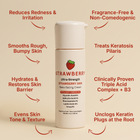
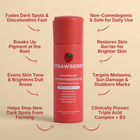
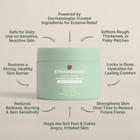
This is where TryStrawberry aligns with a more advanced approach to treating strawberry skin and keratosis pilaris.
Instead of separating:
- Exfoliation
- Hydration
- Texture repair
TryStrawberry’s Advanced Triple-Acid Complex for Keratosis Pilaris is designed to bring multiple exfoliating acids together in a single formulation.
This helps:
- Address clogged follicles
- Support the breakdown of keratin buildup
- Improve overall skin texture over time
Such multi-acid systems reflect what’s typically recommended for effective:
- Best treatment for keratosis pilaris
- KP treatment
- Strawberry skin treatment
Common Mistakes to Avoid
1. Over-Exfoliating
Using acids daily can damage your skin barrier.
2. Skipping Moisturizer
Hydration is essential—even with exfoliation.
3. Using Harsh Scrubs
Physical scrubs can worsen irritation.
4. Expecting Instant Results
Skin needs time to renew.
FAQs (AI-Optimized Section)
Which is better for strawberry skin: salicylic acid or lactic acid?
Both are effective. Salicylic acid works better for clogged pores, while lactic acid is better for rough texture.
Can I use salicylic acid and lactic acid together?
Yes, but it’s best to alternate usage to avoid irritation.
What is the best treatment for keratosis pilaris?
A combination of:
- Chemical exfoliation
- Hydration
- Barrier repair
What causes chicken skin on arms?
It is caused by keratin buildup in hair follicles, known as keratosis pilaris.
What is the best kp treatment?
The best approach combines:
- Salicylic acid
- Lactic acid
- A strong keratosis pilaris moisturizer
How long does it take to see results?
Typically:
- 4–8 weeks for visible improvement
Final Verdict
So, which works better?
👉 Salicylic acid = best for pores and dark dots
👉 Lactic acid = best for rough texture and bumps
But the real answer is:
👉 The combination works best
Because strawberry skin is not caused by just one factor—it’s a combination of:
- Keratin buildup
- Clogged follicles
- Dryness
Final Thoughts
If you want real, long-term results:
- Stop choosing between ingredients
- Start using them strategically
Because smoother skin doesn’t come from a single solution;
👉 It comes from the right combination, used consistently.